Creative Services Outsourcing in the Philippines

Thinking of growing a team of creatives in the Philippines? Below we share some helpful information and things we have learned along the way! Be sure to check out the team profile for one of our awesome & amazing Digital Designers (at the end of the article).

The creative industry is considered one of the fastest-growing sectors in the Philippines and is estimated to employ hundreds of thousands of people. As a result, the Philippines is known and recognised for its strong talent pool in digital design, animation, video production, and software development. Many Australian agencies and businesses have recognized the value of tapping into this talent pool, and the demand for Filipino creatives continues to grow.

Filipino creatives are typically well-educated and highly skilled, with most holding degrees or certifications in their respective fields. They are also known for their adaptability and willingness to learn new skills and technologies, which allows them to stay up-to-date with the latest industry trends and best practices.

Australian agencies and businesses have recognized the value of tapping into the Filipino creative talent pool, and the demand for Filipino creatives continues to grow.

Why outsource creative work to the Philippines?

Quality of work: The Philippines is known for its highly skilled workforce, particularly in creative fields such as graphic design, animation, and video production. Filipino creatives are known for their attention to detail, their ability to work under pressure, and their commitment to producing high-quality work.

Cultural fit: The Philippines has a culture that is similar in many ways to Western cultures, particularly in terms of work ethic and business practices. This means that Filipino creatives are often more attuned to the needs and expectations of Western clients than creatives from other countries.

Language: The Philippines is one of the largest English-speaking countries in the world, with English being the primary language of business, education, and government. This means that communication between clients and Filipino creatives is typically very smooth, and there are few language barriers to overcome.

Time zone compatibility: The Philippines is in a time zone that is well-suited to working with clients in Western countries. This means that Filipino creatives can work during the day while their clients are awake, which can facilitate communication and collaboration.

Team Member Profile

Meet Ron (and his puppy Bituin or Star)! Ron is awesome and has been a member of the Platintel team almost since our inception.

Ron currently works with one of the most recognised and well regarded digital agencies in Australia (who also happen to be a subsidiary of one of the world's largest media companies). As a Digital Designer, Ron has worked on campaigns for the likes of Mercedes Benz, Audi, LG and Mecca, just to name a few!

Ron has worked on campaigns for the likes of Mercedes Benz, Audi, LG and Mecca!

Ron is an uncle to six amazing kids, who he loves to goof around with on his days off. Besides design and arts, he is also an avid fan of music!

Want an amazing creative like Ron as part of your team? You can reach out to us here, via our contact form and we will get back to you (usually within a few hours)

Filipino Culture: Managing, Motivating and Engaging Your Remote Team

Filipino Culture

Filipino culture is known for its strong family ties, hospitality, and resilience. These values play a significant role in shaping how Filipinos behave and interact with others, including in the workplace. As a result, Australian businesses building remote teams in in the Philippines should familiarise themselves with these cultural nuances to effectively manage and motivate their Filipino teams.

In a study conducted by the Society for Human Resource Management, they found that Filipinos value job security, relationships with colleagues, and work-life balance above all else. This study underpins the importance of creating a positive work environment and fostering strong relationships among employees.

To understand Filipino culture, it's essential to appreciate the concept of "pakikisama." This Filipino term refers to the strong sense of social harmony and belongingness among individuals, which is deeply ingrained in Filipino culture. Filipinos value relationships, collaboration, and teamwork, and these are integral to their way of life.

Another important cultural aspect to note is the concept of "hiya." This Filipino term translates to shame or embarrassment and is closely tied to the desire to maintain social harmony. Filipinos are generally respectful and non-confrontational, preferring to avoid conflict or situations that may cause embarrassment.

Filipinos value relationships, collaboration, and teamwork, and these are integral to their way of life.

Managing Filipino Employees

When it comes to managing Filipino employees, it's essential to establish trust and build strong relationships. In Filipino culture, relationships are based on trust, and this trust needs to be earned over time. You should take the time to get to know your Filipino employees, show interest in their personal lives, and build a personal connection with them. This can help establish a sense of camaraderie and create a positive working environment.

Communication is also critical, be mindful of the language you use and avoid confrontational or aggressive tones. Filipinos respond better to a soft and gentle approach and may shut down if they feel attacked or criticized. Ensure you are clear in your communication and avoid vague or ambiguous language, as this can cause confusion. Process is king when leading Filipino teams, establishing clear guidelines around work process and tasks will go a long way to establishing a productive remote team.

Process is king when leading Filipino teams, establishing clear guidelines around work process and tasks will go a long way to establishing a productive remote team.

Engaging and Motivating Filipino Employees

To keep Filipino employees engaged and motivated, it's important to understand their intrinsic motivation. In Filipino culture, family is a significant source of motivation, and many Filipinos work hard to provide for their families. Platintel tap into this by offering family-friendly working hours (our teams predominantly work a morning shift, finishing by either 2pm or 3pm in the afternoon, local time, additionally we offer flexible working arrangements). This means we not only get access to a broader pool of talent, but we are also able to keep our teams happy and motivated at work.

A study by Gallup found that engagement levels among Filipino employees are higher than the global average. However, and perhaps more importantly, this same study found that Filipino employees are more likely to leave their jobs due to work-life balance issues. This highlights the importance of offering family-friendly policies and work-life balance programs to keep Filipino employees engaged and motivated.

Recognition is also important in Filipino culture, and employees appreciate being acknowledged for their contributions. Take the time to recognise your remote teams' efforts and celebrate their successes, both big and small. This can be as simple as a verbal acknowledgment or a small token of appreciation. The important thing to remember to to engage and include them in the same way you would your onshore team. To assist with this, Platintel deploy a company wide reward and recognition program, rewarding and recognising our team for their contributions regularly.

Have you considered offering additional training and development opportunities for your remote teams? Filipinos value education and continuous learning, and they appreciate opportunities to improve their skills and knowledge. Offering training and development programs that align with your remote teams' career goals and aspirations can improve on-the-job performance, and foster a sense of belonging between your remote team and your onshore business.

Platintel Outsourcing deploy a company wide reward and recognition program, rewarding and recognising our team for their contributions regularly.

To summarise, if you have (or plan to build) a remote team in the Philippines, it will pay dividends for you to seek to understand the nuances of Filipino culture as a means to effectively manage and motivate your remote employees. Building strong relationships, effective communication, being flexible in working arrangements, providing recognition, and offering training and development opportunities are all essential to keep Filipino employees engaged and motivated in the workplace. By embracing these cultural nuances, you will create a positive work environment and build a strong and motivated remote workforce.

Keen to learn more about how Australian businesses just like yours are engaging remote teams in the Philippines? You can contact us via this link, or email info@platinumoutsourcing.com.au.

Outsourcing - BPO vs. Freelance: What, When and Why?

In my most recent discussions on talent with both our existing partners and potential new customers, the underlying message has been the same - everybody is having a hard time mobilising skilled labour.

Savvy businesses are weaponising their ability to quickly and efficiently find top tier talent by leveraging outsourced teams as part of their talent acquisition strategy, and as a result are gaining a competitive advantage. 

What are your options if onshore hiring is not delivering you the right talent?

Sure, if not already, you can engage an agency to essentially manage your recruitment pipeline (this in itself is a process). However, if the talent pool is dry, chances are, you end up in the same spot as you are now, just weeks or even months further down the line. 

It is no secret that freelance platforms such as Upwork and Fiverr (although having a different offering to a traditional BPO) are indirect competitors of our business. That said, there have been a number of occasions where we have had initial conversations with prospective clients, and ended up directing them to a freelance platform. Why? Because there is time and place for both. 

Below is a short list, based off of my experience in dealing with countless Australian SME, across a variety of different verticals, that will hopefully help to guide you on the What, When and Why of BPO vs. Freelance.

What: 

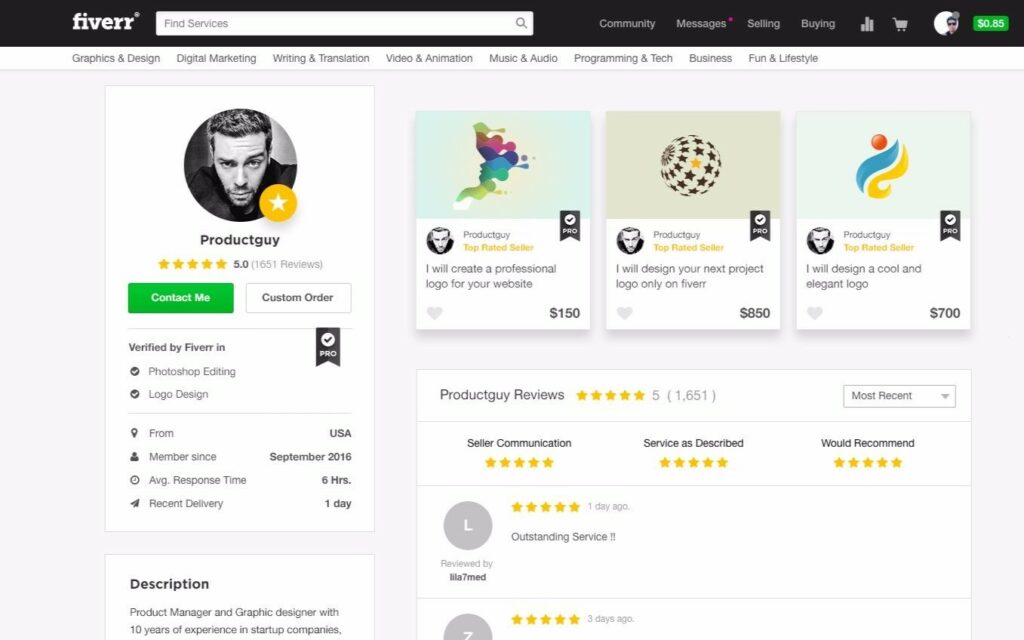
Freelance platforms allow your business to connect directly with talent, both onshore and offshore (on a contract basis). You agree on project deliverables, milestones, and pricing. You then release funds at set intervals, in most cases based on the project deliverables. You will generally rely on past reviews of a freelancer to gauge their suitability for the project or task you are seeking to outsource.

You can browse profiles and ready reviews to gauge a freelancers suitability for your short-medium term project or one off task

Freelance platform - fiveer

Business process outsourcing ('BPO') is the delegation of a business process to an external entity (who could be located both onshore or offshore). There are a variety of outsourcing models, however in Platintel's case, we are a co-sourcing provider. Which means we find you talent, they work from our offices (as full time employees - not contractors), we supply all required physical IT equipment, and they report to you as an extension of your onshore team (with us managing all employment ancillaries such as payroll, probationary reviews etc). You then simply pay us a pre agreed monthly fee.

The Philippines, the home of our flagship office, has a working age population of 71,000,000 people; you can access an enormous talent pool and we don't charge any onboarding fees

When:

Freelance platforms are cost effective when you have short to medium term projects, or non recurring standalone tasks where a full time asset is not required. And, when retaining the IP or learnings from completing the project/task is not a requirement. 

BPO should be a consideration when you have the requirement for a permanent asset/s, and want continuity. Our team are employed full time, with benefits such as healthcare, performance bonuses etc. So, they are incentived to perform and meet performance markers. 

Our team are all employed full time, with benefits such as private healthcare, performance and attendance bonuses'; we operate out of offices in Metro Manila

Why: 

Why choose freelance?

Why choose BPO?

BPO's charge a flat monthly fee, up to 70% cheaper than onshore hiring, and generally 15-30% less than hiring a freelancer - in our case, we do not lock you into any type of long term agreement either

BPO's provide you with access to dedicated human resources, who are working for solely your business

Gone are the days of outsourcing being a long winded, complex process. In 2022, Australian SME are as agile as ever, and the rise of remote work has collectively opened the eyes of leaders to the benefits outsourcing can offer - whether through freelance, or partnership with a BPO.

Thanks for reading. If you would like to learn more, please use any of the contact options here on our site!

Team Building Event - Platintel

Both myself and our Founder, Tim Webb believe that our people are the core of our business. Platintel's ability to attract and retain great talent in the Philippines is fundamental to delivering a positive experience for our customers.

For business process outsourcing companies like Platintel, people are our product. The talent market globally is as competitive as ever, and how companies engage with this talent and the offering they provide are key to attracting and keeping the best human resources.

As part of our employee value proposition, alongside a range of great employment benefits, we aim to put on a minimum of three team building events per year. Our latest event was team bowling at Alabang Town Center. We were split into four teams and competed against each other for both bragging rights (and unbeknownst at the time) a small cash bonus for each member of the winning team (for laughs, the lowest scoring player also got a cash prize).

Bowling at Alabang Town Center

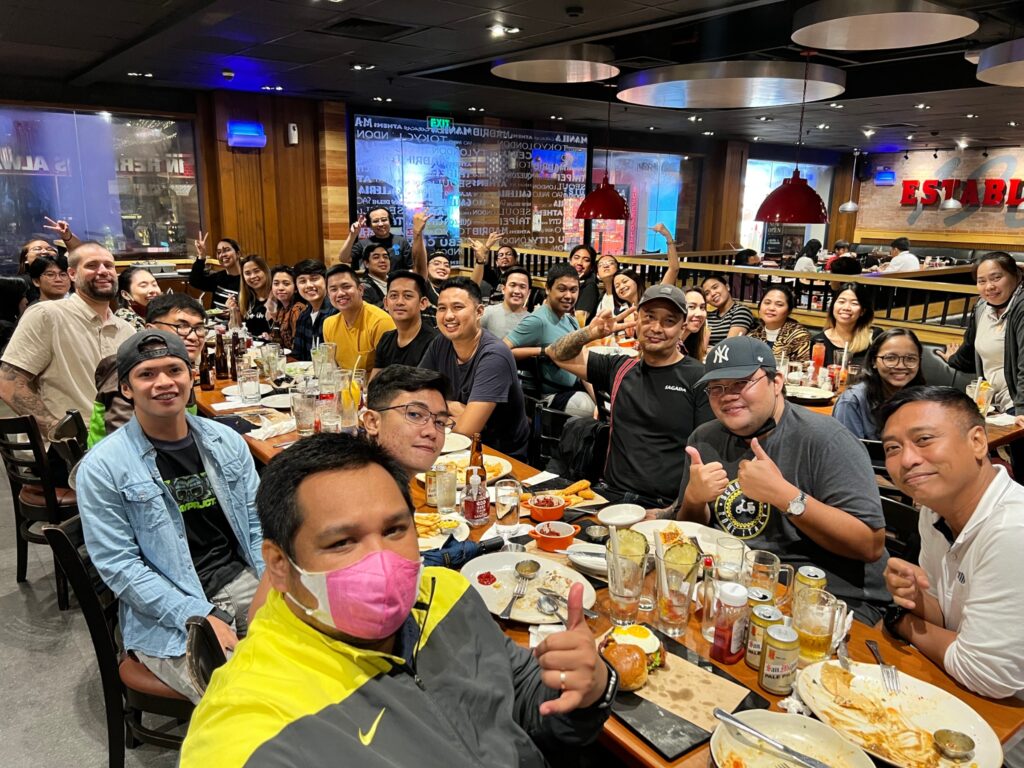
After bowling we moved onto dinner at TGI Fridays (a team favorite). Dinner was filled with lots of laughs, but little conversation, as we all took the time to fill up on steak, burgers, wings and fries! Healthy? No. Delicious? Absolutely!

TGI Fridays Dinner
Dinner at TGI Fridays

However in all seriousness, regular team building events are a great way for me as a leader to catch up with our team in a less structured environment and get to know them on a more personal level. I feel as an organisation our team has solid foundations for open and honest communication, however there is always room for adjustments and improvement. Regular events like this one open up another channel for me and my team to communicate and we all have an awesome time whilst doing it. Here is to the next one!

Why Outsource Your Customer Support to the Philippines?

In our day-to-day lives, most of us as consumers have had exposure in some degree to outsourced customer support. Whilst most certainly our experiences with outsourced customer support differs, there is a strongly resounding consensus that a positive customer experience plays a primary role in increasing customer engagement, upping conversions, and developing brand loyalty (all of which is supported by research and data).

Have you ever considered outsourcing your customer support to a BPO company in the Philippines?

Before we get into the reasons why you should consider outsourcing your customer support to the Philippines, let's first take a look at some data driven insights on the importance of a good customer support function (for all businesses).

Real Time Customer Support - Platintel

Customer Acquisition Cost ('CAC')

CAC is a financial metric that identifies the cost to your business of acquiring a customer. How do you calculate CAC? Simply put, you define a measurement period (eg. financial year), you pool all your costs associated with winning customers (i.e. marketing spend, sales costs etc.) and then divide that dollar amount by the total number of new customers you acquired during that same period. You will then be left with a dollar figure equal to the cost of acquiring every new customer.

In data provided by marketing and advertising agency, Invesp, the majority of businesses place a greater emphasis on acquiring new customers than retaining existing ones (44% vs.18%). This is despite the fact that it costs a whopping five times more to win a customer than it does to ensure you keep an existing one (also known as retention)!

It costs your business five times more to win a customer, than it does to retain an existing one.

Price Premium

Who would of thought? Customers will pay more for a product or service when they receive a better level of customer support. In fact, according to Truelist, as many as 86% of customers would pay more for a better service. More specifically, happy and engaged customers are responsible for more than 2.5X the revenue for businesses than those customers who are only somewhat satisfied.

Customers buy and pay more for better service.

Brand Image and Reputation

Who doesn't want their business and brand to have a great image in the minds of customers? The level and quality of customer support you provide to your customers is a key pillar in building a positive brand image and reputation and understanding the connection between building loyalty and how you manage your customers through every touch point is critical.

What are the leading factors that consumers identify with a positive customer support experience? According to Zendesk , the top four metrics that consumers identify as being most important to their experience with a brand are:

  1. Issues being resolved quickly
  2. Support is available in real time (24/7)
  3. The support agent is friendly
  4. I can access customer support through my desired contact method

In the same report, Zendesk identify that 3 out of 5 consumers respond that good customer support and service is required to feel commitment toward a brand.

Good experiences are the fuel for customer loyalty, bad experiences drain the tank.

How can working with Platintel help provide your customers better support and enhance their experience with your business?

We have listed and expanded upon some common ways outsourcing your customer support to the Philippines can improve the customer experience.

Outsource Customer Support to the Philippines with Platintel - click here

Add Additional Customer Support Channels

Customers want support at their finger tips. Gone are the days where customers will happily wait for minutes in long phone queues for minutes to get support or resolve their enquiry. Additional customer support channels (such as live chat) give your customers access to real time support. And, with 79% of customers indicating that live chat is their preferred method of receiving support, if your business is lacking this support channel, you are missing a key opportunity to improve your level of customer support.

Remember - real time customer support is not only important for your existing customers, but arguably, more important for potential customers who may be in the midst of making a purchasing decision (prior to checkout as an example). Customers are three times more likely to make a purchase from you when interacting with a live chat support agent, yet according to Capterra, only a third of businesses in Australia are currently leveraging live chat as a customer support channel!

Give your business a competitive advantage! Provide a higher level of customer support in real time, drive improved revenue through higher conversions and deliver an all round better experience for your customers by leveraging offshore and outsourced customer support teams.

Live Chat Agent - Platintel

Additional Customer Support Resources

Adding more customer facing resources gives your customers access to a greater level of support. Outsourcing gives you full control of your resourcing levels and minimises risk - we do not lock you into long term agreements. During times when margins are being squeezed, and CAC is rising, leveraging a partnership with a trusted BPO provider will allow you to maintain an appropriate level of customer support resourcing without the damage to your P&L that comes with onshore hiring.

Platintel gives you access to trained, qualified, full time (and dedicated) customer support resources via our modern offices here in Metro Manila.

Increase Customer Support Hours of Availability

Platintel operates 24 hours a day, 7 days a week. Your business can increase its hours of customer support availability without the need for additional investment in keeping your onshore facilities open for longer. Additionally, you avoid paying employee overtime or risking the burn out of your onshore customer facing teams by having them working longer hours.

Customer support outsourcing is a tried, tested and proven strategy for both improving the customer experience and saving money. Our customers are currently realising savings of 70% vs. onshore employment and associated costs.

Outsourcing your customer support improves the customer experience and saves you money.

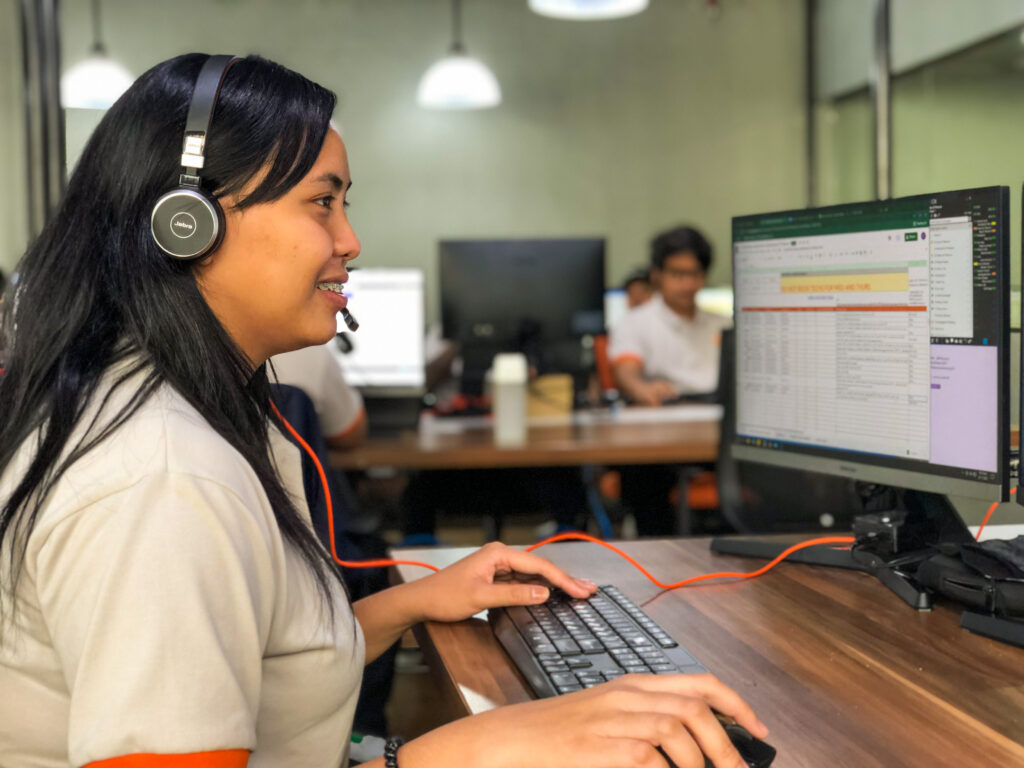
Customer Support Agent - Platintel

Larger Talent Pool

The talent pool in the Philippines is enormous, and it has a long and storied history as the premier outsourcing location in world. This is why some of the most recognisable brands in the world (such as Microsoft and Amazon) are currently leveraging teams here. Nearly 750,000 Filipinos complete a university degree every year, so that they are prepped and ready to enter the workforce. This means that the Philippines has more than 45 million trained and qualified people able and ready to work for your business right now.

We love nothing more than chatting with Australian companies about how we are improving the customer experience for our partners, as well as saving them money. You can reach out to us here via our contact form or email info@platinumoutsourcing.com.au for further information or to setup a time to chat.

Platintel: AFR Fast Starter 2022

Platintel has been recognised by the Australian Financial Review as one of the fastest growing young companies in Australia for 2022.

The Australian Financial Review Fast Lists include the “Fast 100” and “Fast Starters” and are the authoritative voice on the fastest growing companies in Australia. 

Platintel was ranked #88 out of 100, and was the only Australian outsourcing company who made the list.

Our Founder and CEO, Tim Webb had this to say -

'I am extremely proud of each of our talented and committed team members and the efforts they display everyday in delivering on our mission of providing easy access to outsourced teams to Australian businesses'

Want to find our why Platintel is growing so quickly? Click here to arrange a time to chat with us.

What services does Platintel provide?

Platintel provides Australian businesses easy access to outsourced teams via our offices in the Philippines. We specifically operate in four customer verticals (click on any of the below services to learn more):

Creative and Development Outsourcing

Customer Support Outsourcing

Accounting and Finance Outsourcing

Back Office and Administration Outsourcing

The team at Platintel works tirelessly in providing a great business process outsourcing experience for all of our current partners, and it is only through our teams efforts that we have been able to grow so quickly (and sustainably).

You can access the full 2022, AFR Fast Starters list by clicking here.

Go team Platinum!

Outsourcing to the Philippines: all your questions answered

Why outsource to the Philippines?

The Philippines has long been the premier destination for outsourcing services, globally. The prominence of the BPO industry here in country and its position as the leading employer of choice for Filipinos creates an enormous talent pool of candidates in a variety of job functions. Remarkably, the BPO industry contributes more than 10% of the entire GDP of the Philippines!

Filipino's speak great English! The English language was introduced into the Philippines as a result of the presence of the US in the country (during its colonial occupation) in the early 1900's; English is now constitutionally named as an official second language of the Philippines. The English language is also prominent within the Philippines education system. Additionally, the accent of Filipinos is much 'lighter' than that of many of their Asian counterparts, such as other outsourcing destinations like India.

Filipino's are well educated; tertiary education is both popular and prevalent in the Philippines with 1.6 million Filipinos expected to graduate from higher education in 2022.

1.6 million Filipinos are expected to graduate from higher education in 2022

Alongside language and education, the Philippines is a strong cultural fit for Australian businesses looking to outsource. Like Australia, Christianity is the majority faith in the Philippines (making up approximately 90% of the population). So much like Australian's, popular holidays such as Christmas and Easter are celebrated (almost universally). Filipinos also love their sport, especially basketball and boxing. Go Manny!

Types of outsourcing services

Co-sourcing in the Philippines:

The most popular and familiar outsourcing model (for Australian SME). Whereby businesses retain full control and, their offshore resources simply act as an extension of their onshore team (think someone working remotely). The BPO you partner with manages all employment ancillaries such as HR and payroll. And in our case, we provide brand new physical IT equipment as well. You then manage your new offshore team member/s the same way in which you would a team member in Australia working remotely.

Offshoring in the Philippines:

The offshoring model of outsourcing is where an entity shifts an entire segment of their business offshore to a BPO to manage end to end, and eliminates the presence of this part of their business onshore. This includes the BPO providing all necessary systems and IT infrastructure, support teams etc. This model is more complex, as well as cost intensive, and is usually reserved for large multi-nationals (think Microsoft, Amazon, Uber etc).

Co-sourcing is the most popular and widely used outsourcing model for Australian small to medium sized businesses, and the barriers to entry are low

How much does it cost to outsource?

Despite the standard of living in the Philippines continuing to rise, and the emergence of a burgeoning middle class, the cost of living in the Philippines remains very low in comparison to Australia. This allows Australian businesses to enjoy large cost savings through a partnership with a BPO versus onshore hiring.

Generally speaking, savings in the range of 70% are not unusual.

Platintel generally aims to partner with organisations who are seeking a full time remote team member. We believe that providing dedicated full time resources in the Philippines delivers the best experience for our customers (as opposed to part time resources working for multiple businesses at one time).

Save up to 70% vs. onshore hiring through a partnership with an Australian owned and managed outsourcing company - Platintel

All of our team are employed on a full time basis (not contractors), with access to all government mandated statutory benefits as well as additional employment benefits such as private health care, allowances, fully funded team building events and free snacks!

The below indicative monthly prices* are all inclusive (ex of GST), with nothing more to pay. We do not charge any additional fees for onboarding, and provide all our resources with brand new IT equipment (laptop or PC, bluetooth headset, PC / laptop ancillaries).

What jobs can be outsourced?

These are some of the most common roles Australian businesses are outsourcing, but is not an exhaustive list of all services we provide. You can find further information on what we do by clicking the services drop down in the menu at the top of this page or by clicking on any of the links in the below list.

Data Entry outsourcing - $1,100 AUD

Customer Support outsourcing ie. call centre - $1,700 AUD

Marketing Coordination - $2,000 AUD

Accounts Officer (AR & AP) - $2,000 AUD

Front End Developer - $3,100 AUD

Backend Developer - $3,700 AUD

Full Stack Developer - $4,400 AUD

*pricing will differ based on candidate experience

Want further details on pricing? Click here and send us an enquiry - we respond within a few hours

What are the benefits of outsourcing?

The truth is, just about any job role can be outsourced. The more important question is what will work for your business, will it add value, and will it achieve the desired result. Whilst cost saving is generally a significant contributing factor in the decision making process, there are other factors and key benefits that outsourcing provides outside of the obvious cost savings.

Focus on your core business

Outsourcing gives you the scope to focus primarily on your core business. What do we mean by this? Non value add activities such as sales order entry, processing of returns, updating of product listings etc are all low hanging fruit in terms of the types of tasks that can be easily shifted to an outsourcing provider in the Philippines.

Access a larger talent pool

Access a much larger talent pool, gain a competitive advantage by looking outside Australian borders to secure the right person for your team. The Philippines has a working age population of nearly 48 million people in 2022! Outsourcing does not mean you have to reduce your onshore team in size, re align your onshore resources, and scale your team offshore.

De-risk your business

Outsourcing can significantly de-risk your business. Onshore hiring means you have obligations under Fair Work Australia to manage redundancies etc in the event trading conditions change. Platintel has a simple 60 day notification if you wish to cease using our services and there are no exit fees or additional costs to pay.

Outsourcing provides benefits to your business outside of just significant cost savings

What is the process to begin outsourcing?

Outsourcing to the Philippines made easy. We are committed to helping Australian businesses to think outside the box by providing them with easy access to outsourced teams. At Platintel we work on a five step onboarding process.

Discovery: we take the time to completely understand what it is you are trying to achieve by outsourcing. We conduct face to face discovery meetings (either in person or virtually) to gather as much information as we can about your goals, and plans to outsource. This includes collecting job specific information such as position descriptions, KPI's, and your ideal profile for your new team member/s.

Recruitment & Selection: we recruit bespoke for all of our customers. This ensures we get both the correct skills match, but also the right cultural fit for your team. Some of our partners choose not to be involved in the recruitment process prior to selection, and we run pre screening of candidates, and the interview process on their behalf. Others, choose to be intimately involved in the process, joining the interviews and conducting skill assessments (such as live coding tests for developers).

There is no commitment to use our services prior to selection and a start date being agreed, there are also no upfront costs

Start Date Agreed: once you have selected your ideal offshore team member/s, a start date or go-live date is agreed. At this point you sign our simple and straight forward service agreement and we begin prepping for your team members first day working for your business!

Induction: we run a Platintel company induction with all new team members on their first day. We introduce them to our business, our payroll and HR processes and policies, general KPI's regarding schedule adherence etc. and get them set up at their workstation with all the necessary IT equipment to start working for your business.

Training & Handover: similarly to the recruitment and selection stage, some of our customers like us to be involved in the training of their new offshore team. We can also assist in the creation of work instructions and process documents to ensure your team have access to all the necessary resources to be able to do their job to the required standard. This is an add on benefit and is offered to all customers free of charge. Once training is completed, we essentially 'hand over' your new team to you, and they begin working in your business like any other member of your team.

We check in regularly with both you and your team to ensure things are working as they should be (this includes us conducting one on ones with your team here in Manila, facilitating probationary reviews, and general coaching for improvement).

We can also assist in the creation of work instructions and process documents to ensure your team have access to all the necessary resources to be able to do their job to the required standard - this benefit is offered free of charge

We have more than doubled in size during 2022 and being recognised externally along the way for this acheivement, this is a direct result of our commitment to giving Australian businesses easy access to outsourced teams here in the Philippines.

We love nothing more than speaking with Australian businesses about how Platintel is adding value through sustainable, ethical, and pragmatic outsourcing solutions.

Contact us today to discuss how we can help your business also realise the benefits of outsourced teams.


Outsource Accelerator - Podcast

Our COO, Dale Pearce was recently featured on the Outsource Accelerator podcast with Derek Gallimore. Check out the episode at this link!

Manila Freedom Run 2023: Platintel

Manila, the bustling capital city of the Philippines, comes alive each year with the resounding cheers and footfalls of passionate participants, all united by a common cause – the Freedom Run. This highly anticipated event not only serves as a celebration of the country's independence but also as a powerful platform for advocating freedom and societal progress. With its rich history and unwavering commitment to a good cause, the Freedom Run has become an iconic event that inspires and mobilises thousands of individuals, young and old, to run towards a brighter future.

For over a decade, the Freedom Run has been an integral part of Manila's cultural fabric. Originating in 2009, the event was conceived as a way to commemorate the country's freedom from colonial rule and to promote the values of unity, resilience, and determination. Over the years, it has grown exponentially, attracting both amateur and professional runners from all walks of life, eager to support the cause of freedom.

The Freedom Run embodies a spirit of philanthropy, serving as a platform for raising awareness and funds for various charitable initiatives. The event partners with local organizations dedicated to uplifting underprivileged communities, empowering marginalized groups, and promoting education and healthcare. By participating in the Freedom Run, individuals contribute to these worthy causes, making a tangible difference in the lives of those in need.

The Freedom Run is typically held on or around the 12th of June, which marks the anniversary of the Philippines' independence from Spanish colonization. The event includes multiple race categories to cater to different fitness levels, ranging from a 3-kilometer fun run to more challenging distances such as 10 kilometers and even a half marathon. The race routes wind through iconic landmarks of Manila, offering runners a scenic and memorable experience.

Participants of the Freedom Run not only enjoy the exhilaration of the race but also partake in a vibrant carnival-like atmosphere. The event features lively music, cultural performances, and food stalls serving delicious local cuisine. Runners don their race bibs, often adorned with messages of hope and unity, as a symbol of their commitment to the cause of freedom and social progress.

The Freedom Run in Manila has emerged as an event that encapsulates the essence of freedom, unity, and social responsibility. It provides a platform for people from all walks of life to come together, celebrate the nation's independence, and support worthy causes that uplift marginalised communities. A massive congratulations to all those who participated, especially members of the Platintel team, great effort guys!

Choosing The Right Outsourcing Partner: A Layman's Guide

In a previous life, I was charged with making the decision to outsource to a business process outsourcing ('BPO') provider for a business I was working within. The discovery process was overwhelming. The BPO market is hugely fragmented, with providers large and small, competing to win customer accounts. There are different outsourcing models (offshoring, outsourcing, and co-sourcing). You also have the option of using freelance employees (I have previously discussed the time & place for both options, link here).

Thankfully, I had prior exposure to remote teams (having started my career working for a satellite call centre in Australia, servicing North American customers), which helped somewhat in understanding the implementation process, but everything else prior to that was unchartered territory. A number of years later, I have found myself here in SE Asia operating a BPO company (spread across two countries - the Philippines and Indonesia).

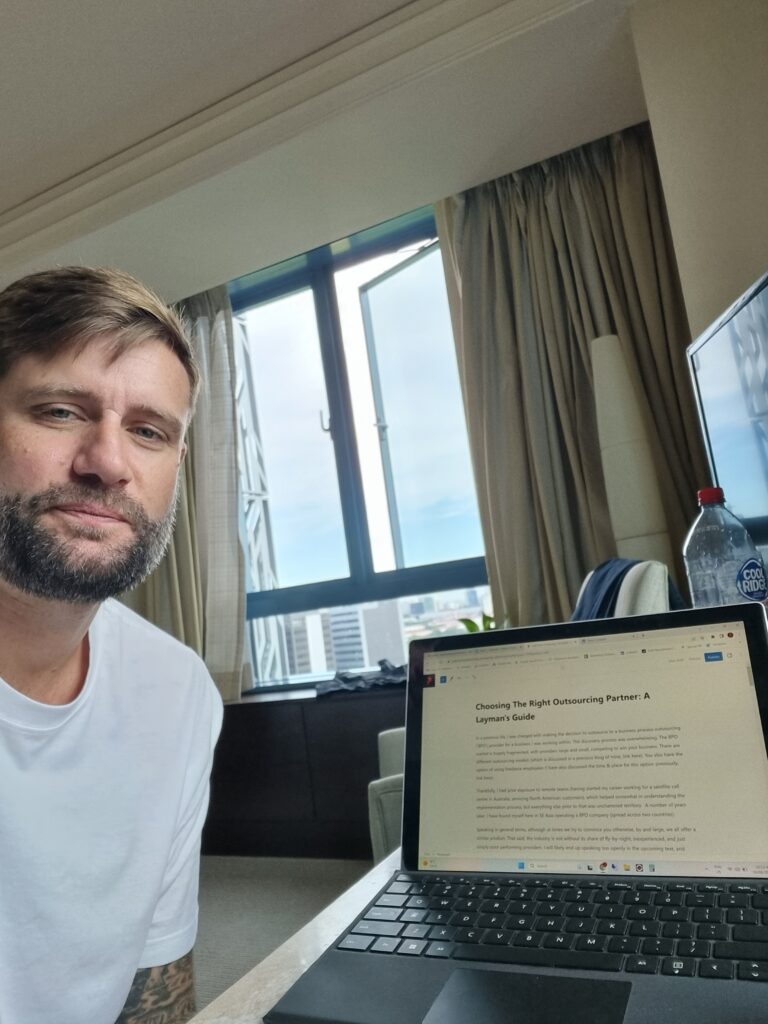
No ChatGPT, some serious bags under the eyes though!

Speaking in general terms, although at times we try to convince you otherwise, by and large, we all offer a similar product. That said, the industry is not without its share of fly-by-night, inexperienced, and just plain poor performing providers.

I was cognisant when writing this, as not to constantly be pitching to you how great we are here at Platintel (I can do this over a discovery call if you like haha), but rather an honest perspective on what we do, what the norms are, and what I believe to be some relatively clear red flags when you decide to go to market (and start your discussions with a BPO provider). Ultimately, a rising tide lifts all boats - we want the outsourcing industry here to continue to thrive, it has and continues to create a burgeoning middle class (particularly in the Philippines) and I hope this guide helps you in someway on your journey into outsourcing; what is a tried and tested, viable strategy, for businesses globally.

Note that this particularly blog is my personal perspective, and based on my lived experience.

I have broken the blog down into the key areas I believe are most important to understand and consider when you embark on your journey of building a remote team. I have given some short insights into how we do things, how others might do it, and the what I believe are some red flags to keep an eye out for.

Contractual Terms

As with any other, contracts can vary widely in our industry. The standard items you should be looking for in a service agreement between you and your BPO provider are the monthly costs, payment terms, and the cessation clause (as it applies to both parties). Platintel have a standard 60 day cessation clause, occasionally this may be extended to 90 days (or in some rare cases shortened to <60 days) . Our team are employed full time, so if a partner exits, we need to give ourselves time to arrange a suitable redeployment for our employee, so there is a balance that needs to be achieved between not locking you down for months on end, but also giving our employees continuity of employment (and job security).

Red Flags:

Onboarding, Additional Fees and/or Upfront Costs

Just a short note on the onboarding process to kick this section off. We like others, advertise that we can 'onboard quickly'. No new partner wants to wait around months on end to find talent, and half the time the reason we are talking with prospective customers is because they cannot mobilise talent onshore. With that said, finding the right fit (both in a technical and team fit capacity) takes time. If you go through the recruitment process with a BPO partner, and within 5 minutes of receiving the job description they start firing you off resumes to you (that don't even seem to match the JD) - run!

For a non technical, customer support type role, the talent pool in SE Asia is large, and they are a somewhat transient working population (meaning they are always looking for new opportunities) - rule of thumb, minimum 2-4 weeks for us to find, prescreen, and get them started (keep in mind if they are currently employed, it immediately jumps to a minimum of 30 days, as that's the standard notice period the have to provide their current employer).

For technical type roles, think developers, engineers etc - minimum 4 weeks, more likely 6 weeks unless we get lucky on timing (and the right candidate is looking as we are searching). When I say 6 weeks, I mean from the moment you say 'go' to the time they first login and start working for you.

We only recently implemented an onboarding fee, our first years of operation we didn't have an onboarding fee and just took the hit for any costs associated with recruiting, procuring equipment and onboarding. We now charge a once off (per employee), $395AUD onboarding fee, it forms part of your first invoice. It helps us cover the cost of the aforementioned items. I don't think there are many providers out there as of today who don't charge some form of onboarding fee (I could be wrong though), I do know that our $395AUD charge is on the lower end of the scale (as compared to others that also have one). I wouldn't be opposed in paying slightly more than that (if it were me), that said, anything above $500AUD I would start asking questions.

In the interests of transparency, if you require non-standard equipment (say you need a MacBook for an iOS developer), there would be additional charges above and beyond our onboarding fee (to up-spec) to that equipment. Don't need to go into a huge amount of detail here, in our case all this info is provided to you well before we even start working together. The learning here is that you should be getting this information upfront and without asking (or finding out in a roundabout way).

Note - I wouldn't be happy if I were asked to pay anything costs upfront, meaning before my remote team member/s started work.

Red Flags:

Monthly Fee and Pricing Structure

First thing to understand about pricing is that generally speaking you will come across two fee structures in our industry. One where the BPO company will tell you their $ margin, and one where they will not. Meaning you cannot always be sure what % of the monthly fee goes to the BPO, and what % goes to employment costs. This is not always a red flag, and admittedly, we ourselves only recently switched from quoting a monthly total, to breaking that down (for new clients) into two components (our fee, and the employment costs). I feel the optics of breaking the fee down make it more palatable for new clients, they can see right away that we are not pocketing obscene gross margin, they know our team receive the lions share, and there is a degree of transparency.

Our fee is reviewed formally every 12 months (from your agreements anniversary date), your teams salary is reviewed every 12 months (financial year). I do not have a huge amount of insights into what our competitors do in terms of the review process - sorry!

Payment terms (as far as I am aware will be 28 days for nearly everyone).

Red Flags:

This blog is taking longer than I expected - still at it..

Facilities & Equipment

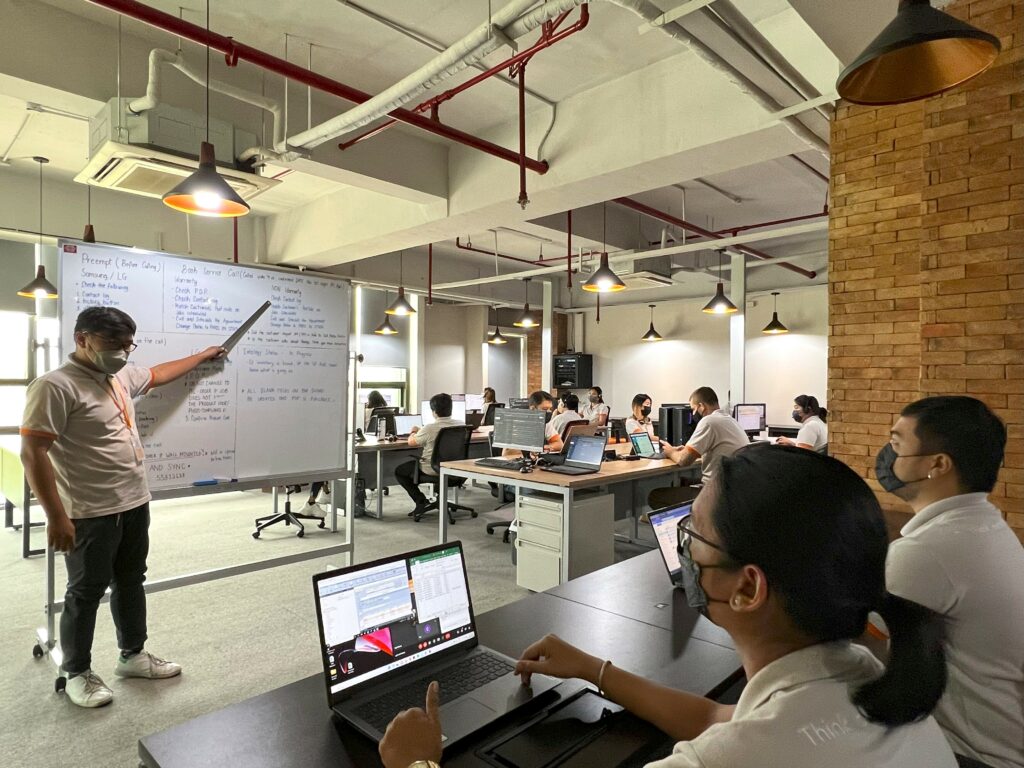
The facilities provided by any BPO provider are really important to your partnership. You want your remote team to be working in a comfortable environment, the same way any onshore team would. Some of our competitors go to market as a pure play remote offer, meaning they do not have a physical office, and the teams they build here all work remotely - there is nothing wrong with this, but it should be clear this is their offering in both their marketing, and when you are speaking with them. It should never be something you discover after engagement.

Our Indonesian team is almost exclusively WFO, and our Philippines team is split 60/40 (60% working WFH/hybrid, and the remaining 40% of the team working permanently from our offices here in Manila). As a general rule, we like highly transactional roles (i.e. customer support) in the office, as these positions tend to require a higher degree of managerial oversight, and the working population in this employment segment tends to be accustomed to working from an office anyway. Our developers, creatives and alike will almost exclusively work remotely, and this is what the employment market demands - if you want the best talent, they tend to always want to work remotely.

If the provider does have a facility, I would want to see what it looks like, understand where its located, and in respect to both WFO/WFH, it would be a good idea to understand what redundancies they have in place regarding power outages, internet downtime etc, as an example do they have generators for power outages, and secondary connectivity options if their primary ISP fails for some reason. These are good things to think and enquire of those you are talking with.

Red Flags:

Employment Benefits

There are lots of well documented evidence on why keeping your employees happy is important; we won't bang on about that here. What you want to see from a BPO provider is:

  1. They employe their team on a full time basis, with full benefits (contractors do not get the same entitlements or protections)
  2. They offer private healthcare
  3. They have a documented salary and remuneration review process for their employees
  4. Their online content shows a happy team, not a group who look like they are in prison (and forcing a smile)

Outside of that, check the red flags below.

Red Flags:

To summarise, we (Platintel) are one of many providers at your disposal, once you confirm there are no red flags, it really comes down to who you feel most comfortable working with, and ensuring they are the right fit for you and your team. I am happy to answer any questions you might have or to act as a sounding board if you are seeking advice, if it leads to a partnership, great! If it doesn't, that's OK also.

You can find me on LinkedIn at this link.

Thanks for stopping by.


Dale.

Business Process Outsourcing (BPO) in the Philippines: An Historical Timeline

Platintel only recently made its entry into the Philippines, setting up our offices in the southern part of the National Capital Region (‘NCR’), Alabang, in 2021. We have since grown our presence in the country to over 80 FTE, and plan to grow our team here to 200 over the coming 18 months.

The BPO industry here in the Philippines was thriving long before Platintel was founded, and has experienced significant growth since its inception, becoming a major economic contributor to the country and its people. As well as becoming what most consider to be the premier destination for the global outsourcing market.

It is an interesting journey for a country that is still very much a developing nation – and a story that is still being written. I have done my best to verify the timeline and information, however if there are any errors in my research please reach out.

Humble Beginnings

The BPO industry in the Philippines can trace its roots back to the early 1990s, when Frank Holz established the Accenture Global Resource Center, marking the birth of the Philippines' first contact center. Following on from that was PeopleSupport, with their Parent company, Los Angeles-based PeopleSupport Inc., beginning operations in 1998, providing outsourced customer service and sales support for e-commerce sites. PeopleSupport were among a handful of outsourcing companies to open in the country in the late 1990’s (at the height of the dot-com bubble burst). Unsurprisingly in hindsight, the decision paid off with first year revenues in the Philippines 5.8 times the 1999 revenues when it operated only in the US.

In February of 1995, Former President Fidel V. Ramos introduced the Philippine Economic Zone Authority (PEZA), which offered Government incentives such as tax breaks and support for infrastructure development. The primary function of which was to assist in attracting foreign investment. This continues to this day, with most BPO companies operating within what are known as ‘PEZA’ zones, enjoying economic and other benefits.

Around the same time, Sykes Enterprises also established their presence in the country, cementing its position as the first of its kind in the nation. This move not only demonstrated the Philippines' appeal as an outsourcing destination but also lit the flame for future industry growth. Sykes retain a very large presence in country today, with employment numbers in the 10’s of thousands.

Rapid Growth and Diversification (the early 2000’s)

The year 2000 witnessed the outsourcing industry contributing 0.075% to the Philippines' GDP, foreshadowing the potential for future growth and economic impact. The Contact Center Association of the Philippines (‘CCAP’) is established, an initiative aimed at promoting collaboration, sharing ideas, and enhancing awareness within the contact centre industry. CCAP now has nearly a hundred member-companies in various locations in the Philippines. These members account for more than 84% of the economic activity and employment in the industry as of 2022.

In 2003, Convergys Corp (now Concentrix) strategically expanded its global footprint by establishing two sites in the Philippines, alongside India, under the leadership of then-president Jack Freker. This move set the stage for increased revenue and job opportunities within the Philippine outsourcing sector. Not long after, the Philippine government launched the ‘Roadmap for the IT-BPO Industry’, which aimed to position the country as a preferred global outsourcing destination.

The mid-2000s saw a surge in the BPO industry's growth, driven by factors like the Philippines' English-speaking population and competitive labor costs. The industry diversified beyond voice-based, contact centre services to include back-office processes like finance and accounting, human resources, and healthcare-related services.

It was in 2007 that Telstra first made its move to outsource roles to the Philippines, as they continue to do up until today. It was around this time that I had my first exposure to outsourcing / offshoring to the Philippines whilst working for a North American company (RCI, now owned by Wyndham Worldwide), when our satellite North American support arm was moved from Australia to the Philippines.

Global Leadership and Expansion (2010s)

In late 2010, the Philippines was named the world’s BPO capital after it employed 525,000 people and generated $8.9 billion in revenue. The sector experienced continued growth, attracting a wide range of businesses, including multinational corporations, startups, and SMEs. The industry expanded beyond Metro Manila, with Cebu, Davao and other cities becoming prominent outsourcing hubs. This expansion helped create job opportunities and economic growth outside of the National Capital Region.

It is now 2012, the BPO industry has revenues accounting for 5.4% of the country's GDP and the sector provided employment opportunities to over 700,000 Filipinos. As technology evolved, the BPO industry in the Philippines adapted by incorporating this into its offerings. This in turn allowed the industry to provide more sophisticated and higher-value services, such as data analytics, software development, and digital marketing. As a result, by the following year (in 2013) revenue generated from the industry had increased to $15.5 billion, while the number of full-time employees reached a milestone of 900,000.

The industry faced a temporary setback in 2017 due to the Marawi conflict in Mindanao, which led to apprehension among foreign investors. Nevertheless, the Philippines' outsourcing sector demonstrated resilience and recuperated its growth trajectory, and in the year 2018, the industry created an additional 70,000 jobs, and added a further $1 billion in revenue.

Late 2010’s to Present Day

By 2019 the Philippines had made substantial progress on the global stage, climbing from 124th to 95th place in the World Bank's ease of doing business index. This upward trajectory signified the nation's commitment to fostering a conducive environment for foreign investment.

Despite the challenging economic landscape brought about by the COVID19 pandemic, the Philippine BPO industry exhibited resilience by still recording a rise in revenues (albeit meager; 1.4%). This tenacity underscored the sector's importance in contributing to economic stability – and the faith placed in the industry by the global market. The year 2021 proved to be a watershed moment for the Philippine BPO industry, with a workforce of 1.3 million and a staggering $30 billion in revenue, the sector solidified its position as a critical driver of the Philippine economy.

This growth has continued into 2022, with a revenue increase of 10.3% to $32.5 billion, and employee headcount rising 8.4% to 1.57 million!

Onwards and upwards!

Thanks for reading.

Virtual Assistants in the Philippines

The role of virtual assistants (VA’s) has evolved to become an integral part of many Australian businesses, across a variety of industries. The Philippines, widely recognized as the global hub, and premier destination for business process outsourcing (BPO), has become the go-to destination for Australian’s looking to hire a skilled, qualified and experienced VA.

Why consider hiring a Filipino Virtual Assistant?

Proficiency in English: The Philippines boasts a population that is largely bilingual (with English as their official second language). With over 90 million English speakers in a country of 103.3 million people, the Philippines ranks high in English proficiency globally. This linguistic dexterity places the Philippines in the enviable position of being the second most proficient English-speaking country in Asia and 18th in the world. These language abilities empower Filipino VAs to engage in nuanced business discussions, comprehend instructions with precision, and competently manage intricate tasks without the need for micro-management or continuous oversight

Building Trust and Relationships: Filipino VA’s excel in building meaningful connections with their clients, juggling multiple tasks and ensuring that client expectations are consistently met. They innately understand the balance between retaining respect for authority, a prominent trait in Filipino culture, and fostering balanced relationships with clients and counterparts from diverse cultural backgrounds

Affordability without Compromising Quality: While cost-efficiency is an undeniable advantage, it's crucial to dismiss the misconception that cheaper somehow means inferior quality. The salaries of virtual assistant services can fluctuate depending on several factors (no different to onshore hiring), including educational background and experience. Filipinos are setting the standard for VA's globally, and the growth of this vertical amongst the many other functions performed remotely from the Philippines is a testament to the quality of candidates available to Australian businesses

Varied Skills: The talent pool of VA's in the Philippines is rich and diverse, long gone are the days of utilising VA's purely for administrative and back-office tasks only. VA's are now available in all 'shapes and sizes', and most will be experienced within a particular niche (think digital marketing, sales support etc). There are also many VA 'all-rounders' with experience across a variety of functions, making them ideal for small or medium business, whereby their function might be less specific

Finding the right Virtual Assistant

The process of hiring a Filipino virtual assistant will vary depending on the BPO you choose to engage with. Our process here at Platintel is outlined below!

Recruitment: We bespoke recruit for all open positions; we do not attempt to fit a round peg into a square hole. We understand that our clients requirements and expectations differ, and equally so does the experience of candidates. Generally we will ask our client partners to provide us a brief in the form of a Job or Position Description, which we will use to assist us in finding the right candidates for prescreening

Prescreening: Our team conducts initial prescreening interviews with candidates, preparing a shortlist for you to then review then decide upon which you choose to progress to a formal interview

Interviews: We arrange the interviews with shortlisted candidates, and assist you in preparing any interview questions (as well as chairing the interviews). Some of our clients trust us to find them the right candidates, and are not involved in the recruitment process, others want to be intimately involved. The choice to what degree you wish to be involved is entirely yours!

Applicant Testing: We leverage technology to assess candidates suitability, our preferred testing platform is Canditech. We offer this add-on benefit at no cost to our client and see it as a way of giving you peace of mind that we are delivering you the 'best in market' talent

Pre-employment Checks: As standard, we conduct two professional reference checks, and pre employment medicals for all new hires. Some clients like us to conduct additional pre-employment checks, such as criminal history checks etc. We are happy to assist with any type of pre-employment check you and your team require upon request

Provisional Offer of Employment: Once you have selected your preferred candidate, and they have successfully fulfilled both the applicant testing and pre-employment check components, we then make the candidate a provisional offer of employment in writing. Once they accept the provisional offer, we then provide you a copy of our, Platintel service agreement for you to review and sign, before we make a formal offer of employment

Formal Offer of Employment: We provide the candidate a contract of employment, which includes details of the role they will perform in your business, in the form of a detailed position description. Our employment contract also includes our internal KPI's, and a reference to 'client KPI's' which you will set for your new remote team member

Onboarding: Our onboarding period is loosely defined as the 30 days prior to your new remote team member starting work, and the proceeding 30 days subsequent to their first day of employment. You will be provided with an onboarding pack with some 'tips & tricks' on managing remote employees, specifically geared to those located in the Philippines. Additionally, we provide you with the details of how employees are managed through the probationary period of employment (6 months), and detail how we will support you on ensuring you get the most from your new Filipino, Virtual Assistant

Advantages of Hiring A Filipino VA via a BPO Company

Cost Savings: partnering with Platintel can lead to substantial cost savings, often up to 70% vs onshore hiring

Managerial Oversight: BPO firms maintain a strong focus on the oversight of their employees. Platintel has an experienced operations leadership team, who support our clients in developing and performance managing their remote teams. We also leverage technology through the deployment of a wide variety of productivity monitoring tools

Onboarding Support: Platintel can assist in the onboarding process, taking some of the burden off of your onshore team, and reducing the time required to effectively onboard your new virtual assistant

If you are interested in learning more about how a virtual assistant can save you time and money, and add value to your business, then get in touch with us here on our website via the Contact or Get Pricing buttons - we reply within two hours.