Outsourcing to the Philippines: all your questions answered

Why outsource to the Philippines?

The Philippines has long been the premier destination for outsourcing services, globally. The prominence of the BPO industry here in country and its position as the leading employer of choice for Filipinos creates an enormous talent pool of candidates in a variety of job functions. Remarkably, the BPO industry contributes more than 10% of the entire GDP of the Philippines!

Filipino's speak great English! The English language was introduced into the Philippines as a result of the presence of the US in the country (during its colonial occupation) in the early 1900's; English is now constitutionally named as an official second language of the Philippines. The English language is also prominent within the Philippines education system. Additionally, the accent of Filipinos is much 'lighter' than that of many of their Asian counterparts, such as other outsourcing destinations like India.

Filipino's are well educated; tertiary education is both popular and prevalent in the Philippines with 1.6 million Filipinos expected to graduate from higher education in 2022.

1.6 million Filipinos are expected to graduate from higher education in 2022

Alongside language and education, the Philippines is a strong cultural fit for Australian businesses looking to outsource. Like Australia, Christianity is the majority faith in the Philippines (making up approximately 90% of the population). So much like Australian's, popular holidays such as Christmas and Easter are celebrated (almost universally). Filipinos also love their sport, especially basketball and boxing. Go Manny!

Types of outsourcing services

Co-sourcing in the Philippines:

The most popular and familiar outsourcing model (for Australian SME). Whereby businesses retain full control and, their offshore resources simply act as an extension of their onshore team (think someone working remotely). The BPO you partner with manages all employment ancillaries such as HR and payroll. And in our case, we provide brand new physical IT equipment as well. You then manage your new offshore team member/s the same way in which you would a team member in Australia working remotely.

Offshoring in the Philippines:

The offshoring model of outsourcing is where an entity shifts an entire segment of their business offshore to a BPO to manage end to end, and eliminates the presence of this part of their business onshore. This includes the BPO providing all necessary systems and IT infrastructure, support teams etc. This model is more complex, as well as cost intensive, and is usually reserved for large multi-nationals (think Microsoft, Amazon, Uber etc).

Co-sourcing is the most popular and widely used outsourcing model for Australian small to medium sized businesses, and the barriers to entry are low
How much does it cost to outsource?

Despite the standard of living in the Philippines continuing to rise, and the emergence of a burgeoning middle class, the cost of living in the Philippines remains very low in comparison to Australia. This allows Australian businesses to enjoy large cost savings through a partnership with a BPO versus onshore hiring.

Generally speaking, savings in the range of 70% are not unusual.

Platintel generally aims to partner with organisations who are seeking a full time remote team member. We believe that providing dedicated full time resources in the Philippines delivers the best experience for our customers (as opposed to part time resources working for multiple businesses at one time).

Save up to 70% vs. onshore hiring through a partnership with an Australian owned and managed outsourcing company - Platintel

All of our team are employed on a full time basis (not contractors), with access to all government mandated statutory benefits as well as additional employment benefits such as private health care, allowances, fully funded team building events and free snacks!

The below indicative monthly prices* are all inclusive (ex of GST), with nothing more to pay. We do not charge any additional fees for onboarding, and provide all our resources with brand new IT equipment (laptop or PC, bluetooth headset, PC / laptop ancillaries).

What jobs can be outsourced?

These are some of the most common roles Australian businesses are outsourcing, but is not an exhaustive list of all services we provide. You can find further information on what we do by clicking the services drop down in the menu at the top of this page or by clicking on any of the links in the below list.

Data Entry outsourcing - $1,100 AUD

Customer Support outsourcing ie. call centre - $1,700 AUD

Marketing Coordination - $2,000 AUD

Accounts Officer (AR & AP) - $2,000 AUD

Front End Developer - $3,100 AUD

Backend Developer - $3,700 AUD

Full Stack Developer - $4,400 AUD

*pricing will differ based on candidate experience

Want further details on pricing? Click here and send us an enquiry - we respond within a few hours

What are the benefits of outsourcing?

The truth is, just about any job role can be outsourced. The more important question is what will work for your business, will it add value, and will it achieve the desired result. Whilst cost saving is generally a significant contributing factor in the decision making process, there are other factors and key benefits that outsourcing provides outside of the obvious cost savings.

Focus on your core business

Outsourcing gives you the scope to focus primarily on your core business. What do we mean by this? Non value add activities such as sales order entry, processing of returns, updating of product listings etc are all low hanging fruit in terms of the types of tasks that can be easily shifted to an outsourcing provider in the Philippines.

Access a larger talent pool

Access a much larger talent pool, gain a competitive advantage by looking outside Australian borders to secure the right person for your team. The Philippines has a working age population of nearly 48 million people in 2022! Outsourcing does not mean you have to reduce your onshore team in size, re align your onshore resources, and scale your team offshore.

De-risk your business

Outsourcing can significantly de-risk your business. Onshore hiring means you have obligations under Fair Work Australia to manage redundancies etc in the event trading conditions change. Platintel has a simple 60 day notification if you wish to cease using our services and there are no exit fees or additional costs to pay.

Outsourcing provides benefits to your business outside of just significant cost savings

What is the process to begin outsourcing?

Outsourcing to the Philippines made easy. We are committed to helping Australian businesses to think outside the box by providing them with easy access to outsourced teams. At Platintel we work on a five step onboarding process.

Discovery: we take the time to completely understand what it is you are trying to achieve by outsourcing. We conduct face to face discovery meetings (either in person or virtually) to gather as much information as we can about your goals, and plans to outsource. This includes collecting job specific information such as position descriptions, KPI's, and your ideal profile for your new team member/s.

Recruitment & Selection: we recruit bespoke for all of our customers. This ensures we get both the correct skills match, but also the right cultural fit for your team. Some of our partners choose not to be involved in the recruitment process prior to selection, and we run pre screening of candidates, and the interview process on their behalf. Others, choose to be intimately involved in the process, joining the interviews and conducting skill assessments (such as live coding tests for developers).

There is no commitment to use our services prior to selection and a start date being agreed, there are also no upfront costs

Start Date Agreed: once you have selected your ideal offshore team member/s, a start date or go-live date is agreed. At this point you sign our simple and straight forward service agreement and we begin prepping for your team members first day working for your business!

Induction: we run a Platintel company induction with all new team members on their first day. We introduce them to our business, our payroll and HR processes and policies, general KPI's regarding schedule adherence etc. and get them set up at their workstation with all the necessary IT equipment to start working for your business.

Training & Handover: similarly to the recruitment and selection stage, some of our customers like us to be involved in the training of their new offshore team. We can also assist in the creation of work instructions and process documents to ensure your team have access to all the necessary resources to be able to do their job to the required standard. This is an add on benefit and is offered to all customers free of charge. Once training is completed, we essentially 'hand over' your new team to you, and they begin working in your business like any other member of your team.

We check in regularly with both you and your team to ensure things are working as they should be (this includes us conducting one on ones with your team here in Manila, facilitating probationary reviews, and general coaching for improvement).

We can also assist in the creation of work instructions and process documents to ensure your team have access to all the necessary resources to be able to do their job to the required standard - this benefit is offered free of charge

We have more than doubled in size during 2022 and being recognised externally along the way for this acheivement, this is a direct result of our commitment to giving Australian businesses easy access to outsourced teams here in the Philippines.

We love nothing more than speaking with Australian businesses about how Platintel is adding value through sustainable, ethical, and pragmatic outsourcing solutions.

Contact us today to discuss how we can help your business also realise the benefits of outsourced teams.


Outsource Accelerator - Podcast

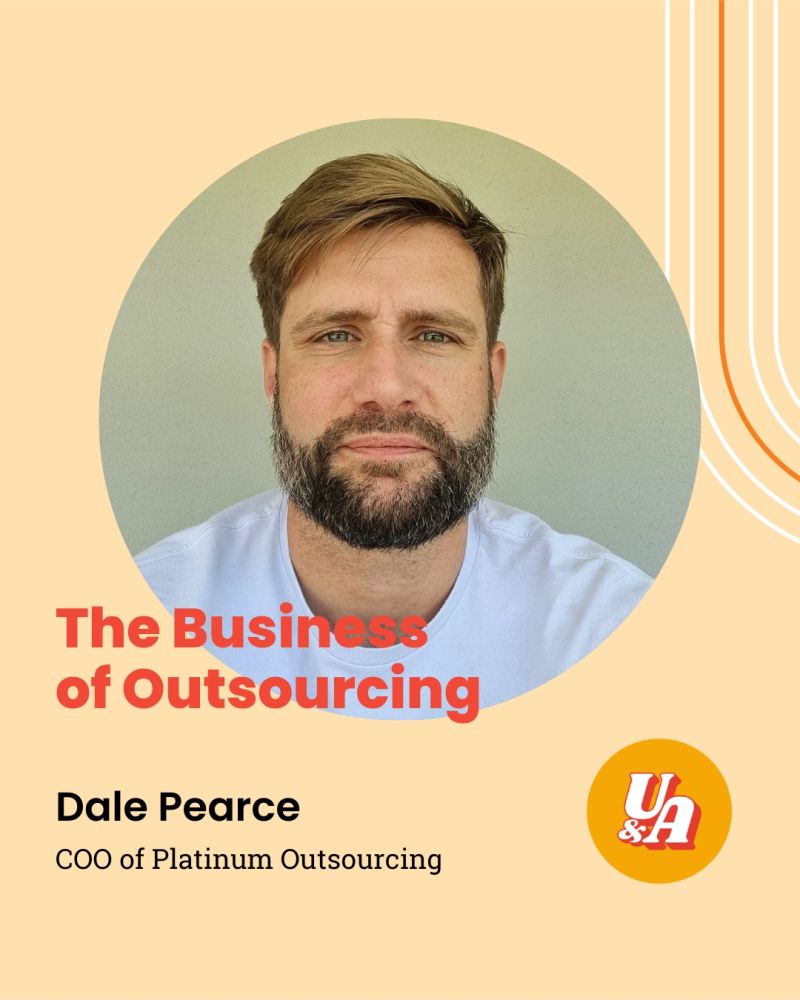
Our COO, Dale Pearce was recently featured on the Outsource Accelerator podcast with Derek Gallimore. Check out the episode at this link!

Choosing The Right Outsourcing Partner: A Layman's Guide

In a previous life, I was charged with making the decision to outsource to a business process outsourcing ('BPO') provider for a business I was working within. The discovery process was overwhelming. The BPO market is hugely fragmented, with providers large and small, competing to win customer accounts. There are different outsourcing models (offshoring, outsourcing, and co-sourcing). You also have the option of using freelance employees (I have previously discussed the time & place for both options, link here).

Thankfully, I had prior exposure to remote teams (having started my career working for a satellite call centre in Australia, servicing North American customers), which helped somewhat in understanding the implementation process, but everything else prior to that was unchartered territory. A number of years later, I have found myself here in SE Asia operating a BPO company (spread across two countries - the Philippines and Indonesia).

No ChatGPT, some serious bags under the eyes though!

Speaking in general terms, although at times we try to convince you otherwise, by and large, we all offer a similar product. That said, the industry is not without its share of fly-by-night, inexperienced, and just plain poor performing providers.

I was cognisant when writing this, as not to constantly be pitching to you how great we are here at Platintel (I can do this over a discovery call if you like haha), but rather an honest perspective on what we do, what the norms are, and what I believe to be some relatively clear red flags when you decide to go to market (and start your discussions with a BPO provider). Ultimately, a rising tide lifts all boats - we want the outsourcing industry here to continue to thrive, it has and continues to create a burgeoning middle class (particularly in the Philippines) and I hope this guide helps you in someway on your journey into outsourcing; what is a tried and tested, viable strategy, for businesses globally.

Note that this particularly blog is my personal perspective, and based on my lived experience.

I have broken the blog down into the key areas I believe are most important to understand and consider when you embark on your journey of building a remote team. I have given some short insights into how we do things, how others might do it, and the what I believe are some red flags to keep an eye out for.

Contractual Terms

As with any other, contracts can vary widely in our industry. The standard items you should be looking for in a service agreement between you and your BPO provider are the monthly costs, payment terms, and the cessation clause (as it applies to both parties). Platintel have a standard 60 day cessation clause, occasionally this may be extended to 90 days (or in some rare cases shortened to <60 days) . Our team are employed full time, so if a partner exits, we need to give ourselves time to arrange a suitable redeployment for our employee, so there is a balance that needs to be achieved between not locking you down for months on end, but also giving our employees continuity of employment (and job security).

Red Flags:

Onboarding, Additional Fees and/or Upfront Costs

Just a short note on the onboarding process to kick this section off. We like others, advertise that we can 'onboard quickly'. No new partner wants to wait around months on end to find talent, and half the time the reason we are talking with prospective customers is because they cannot mobilise talent onshore. With that said, finding the right fit (both in a technical and team fit capacity) takes time. If you go through the recruitment process with a BPO partner, and within 5 minutes of receiving the job description they start firing you off resumes to you (that don't even seem to match the JD) - run!

For a non technical, customer support type role, the talent pool in SE Asia is large, and they are a somewhat transient working population (meaning they are always looking for new opportunities) - rule of thumb, minimum 2-4 weeks for us to find, prescreen, and get them started (keep in mind if they are currently employed, it immediately jumps to a minimum of 30 days, as that's the standard notice period the have to provide their current employer).

For technical type roles, think developers, engineers etc - minimum 4 weeks, more likely 6 weeks unless we get lucky on timing (and the right candidate is looking as we are searching). When I say 6 weeks, I mean from the moment you say 'go' to the time they first login and start working for you.

We only recently implemented an onboarding fee, our first years of operation we didn't have an onboarding fee and just took the hit for any costs associated with recruiting, procuring equipment and onboarding. We now charge a once off (per employee), $395AUD onboarding fee, it forms part of your first invoice. It helps us cover the cost of the aforementioned items. I don't think there are many providers out there as of today who don't charge some form of onboarding fee (I could be wrong though), I do know that our $395AUD charge is on the lower end of the scale (as compared to others that also have one). I wouldn't be opposed in paying slightly more than that (if it were me), that said, anything above $500AUD I would start asking questions.

In the interests of transparency, if you require non-standard equipment (say you need a MacBook for an iOS developer), there would be additional charges above and beyond our onboarding fee (to up-spec) to that equipment. Don't need to go into a huge amount of detail here, in our case all this info is provided to you well before we even start working together. The learning here is that you should be getting this information upfront and without asking (or finding out in a roundabout way).

Note - I wouldn't be happy if I were asked to pay anything costs upfront, meaning before my remote team member/s started work.

Red Flags:

Monthly Fee and Pricing Structure

First thing to understand about pricing is that generally speaking you will come across two fee structures in our industry. One where the BPO company will tell you their $ margin, and one where they will not. Meaning you cannot always be sure what % of the monthly fee goes to the BPO, and what % goes to employment costs. This is not always a red flag, and admittedly, we ourselves only recently switched from quoting a monthly total, to breaking that down (for new clients) into two components (our fee, and the employment costs). I feel the optics of breaking the fee down make it more palatable for new clients, they can see right away that we are not pocketing obscene gross margin, they know our team receive the lions share, and there is a degree of transparency.

Our fee is reviewed formally every 12 months (from your agreements anniversary date), your teams salary is reviewed every 12 months (financial year). I do not have a huge amount of insights into what our competitors do in terms of the review process - sorry!

Payment terms (as far as I am aware will be 28 days for nearly everyone).

Red Flags:

This blog is taking longer than I expected - still at it..

Facilities & Equipment

The facilities provided by any BPO provider are really important to your partnership. You want your remote team to be working in a comfortable environment, the same way any onshore team would. Some of our competitors go to market as a pure play remote offer, meaning they do not have a physical office, and the teams they build here all work remotely - there is nothing wrong with this, but it should be clear this is their offering in both their marketing, and when you are speaking with them. It should never be something you discover after engagement.

Our Indonesian team is almost exclusively WFO, and our Philippines team is split 60/40 (60% working WFH/hybrid, and the remaining 40% of the team working permanently from our offices here in Manila). As a general rule, we like highly transactional roles (i.e. customer support) in the office, as these positions tend to require a higher degree of managerial oversight, and the working population in this employment segment tends to be accustomed to working from an office anyway. Our developers, creatives and alike will almost exclusively work remotely, and this is what the employment market demands - if you want the best talent, they tend to always want to work remotely.

If the provider does have a facility, I would want to see what it looks like, understand where its located, and in respect to both WFO/WFH, it would be a good idea to understand what redundancies they have in place regarding power outages, internet downtime etc, as an example do they have generators for power outages, and secondary connectivity options if their primary ISP fails for some reason. These are good things to think and enquire of those you are talking with.

Red Flags:

Employment Benefits

There are lots of well documented evidence on why keeping your employees happy is important; we won't bang on about that here. What you want to see from a BPO provider is:

  1. They employe their team on a full time basis, with full benefits (contractors do not get the same entitlements or protections)
  2. They offer private healthcare
  3. They have a documented salary and remuneration review process for their employees
  4. Their online content shows a happy team, not a group who look like they are in prison (and forcing a smile)

Outside of that, check the red flags below.

Red Flags:

To summarise, we (Platintel) are one of many providers at your disposal, once you confirm there are no red flags, it really comes down to who you feel most comfortable working with, and ensuring they are the right fit for you and your team. I am happy to answer any questions you might have or to act as a sounding board if you are seeking advice, if it leads to a partnership, great! If it doesn't, that's OK also.

You can find me on LinkedIn at this link.

Thanks for stopping by.


Dale.

Virtual Assistants in the Philippines

The role of virtual assistants (VA’s) has evolved to become an integral part of many Australian businesses, across a variety of industries. The Philippines, widely recognized as the global hub, and premier destination for business process outsourcing (BPO), has become the go-to destination for Australian’s looking to hire a skilled, qualified and experienced VA.

Why consider hiring a Filipino Virtual Assistant?

Proficiency in English: The Philippines boasts a population that is largely bilingual (with English as their official second language). With over 90 million English speakers in a country of 103.3 million people, the Philippines ranks high in English proficiency globally. This linguistic dexterity places the Philippines in the enviable position of being the second most proficient English-speaking country in Asia and 18th in the world. These language abilities empower Filipino VAs to engage in nuanced business discussions, comprehend instructions with precision, and competently manage intricate tasks without the need for micro-management or continuous oversight

Building Trust and Relationships: Filipino VA’s excel in building meaningful connections with their clients, juggling multiple tasks and ensuring that client expectations are consistently met. They innately understand the balance between retaining respect for authority, a prominent trait in Filipino culture, and fostering balanced relationships with clients and counterparts from diverse cultural backgrounds

Affordability without Compromising Quality: While cost-efficiency is an undeniable advantage, it's crucial to dismiss the misconception that cheaper somehow means inferior quality. The salaries of virtual assistant services can fluctuate depending on several factors (no different to onshore hiring), including educational background and experience. Filipinos are setting the standard for VA's globally, and the growth of this vertical amongst the many other functions performed remotely from the Philippines is a testament to the quality of candidates available to Australian businesses

Varied Skills: The talent pool of VA's in the Philippines is rich and diverse, long gone are the days of utilising VA's purely for administrative and back-office tasks only. VA's are now available in all 'shapes and sizes', and most will be experienced within a particular niche (think digital marketing, sales support etc). There are also many VA 'all-rounders' with experience across a variety of functions, making them ideal for small or medium business, whereby their function might be less specific

Finding the right Virtual Assistant

The process of hiring a Filipino virtual assistant will vary depending on the BPO you choose to engage with. Our process here at Platintel is outlined below!

Recruitment: We bespoke recruit for all open positions; we do not attempt to fit a round peg into a square hole. We understand that our clients requirements and expectations differ, and equally so does the experience of candidates. Generally we will ask our client partners to provide us a brief in the form of a Job or Position Description, which we will use to assist us in finding the right candidates for prescreening

Prescreening: Our team conducts initial prescreening interviews with candidates, preparing a shortlist for you to then review then decide upon which you choose to progress to a formal interview

Interviews: We arrange the interviews with shortlisted candidates, and assist you in preparing any interview questions (as well as chairing the interviews). Some of our clients trust us to find them the right candidates, and are not involved in the recruitment process, others want to be intimately involved. The choice to what degree you wish to be involved is entirely yours!

Applicant Testing: We leverage technology to assess candidates suitability, our preferred testing platform is Canditech. We offer this add-on benefit at no cost to our client and see it as a way of giving you peace of mind that we are delivering you the 'best in market' talent

Pre-employment Checks: As standard, we conduct two professional reference checks, and pre employment medicals for all new hires. Some clients like us to conduct additional pre-employment checks, such as criminal history checks etc. We are happy to assist with any type of pre-employment check you and your team require upon request

Provisional Offer of Employment: Once you have selected your preferred candidate, and they have successfully fulfilled both the applicant testing and pre-employment check components, we then make the candidate a provisional offer of employment in writing. Once they accept the provisional offer, we then provide you a copy of our, Platintel service agreement for you to review and sign, before we make a formal offer of employment

Formal Offer of Employment: We provide the candidate a contract of employment, which includes details of the role they will perform in your business, in the form of a detailed position description. Our employment contract also includes our internal KPI's, and a reference to 'client KPI's' which you will set for your new remote team member

Onboarding: Our onboarding period is loosely defined as the 30 days prior to your new remote team member starting work, and the proceeding 30 days subsequent to their first day of employment. You will be provided with an onboarding pack with some 'tips & tricks' on managing remote employees, specifically geared to those located in the Philippines. Additionally, we provide you with the details of how employees are managed through the probationary period of employment (6 months), and detail how we will support you on ensuring you get the most from your new Filipino, Virtual Assistant

Advantages of Hiring A Filipino VA via a BPO Company

Cost Savings: partnering with Platintel can lead to substantial cost savings, often up to 70% vs onshore hiring

Managerial Oversight: BPO firms maintain a strong focus on the oversight of their employees. Platintel has an experienced operations leadership team, who support our clients in developing and performance managing their remote teams. We also leverage technology through the deployment of a wide variety of productivity monitoring tools

Onboarding Support: Platintel can assist in the onboarding process, taking some of the burden off of your onshore team, and reducing the time required to effectively onboard your new virtual assistant

If you are interested in learning more about how a virtual assistant can save you time and money, and add value to your business, then get in touch with us here on our website via the Contact or Get Pricing buttons - we reply within two hours.

Unemployed & Afraid - Podcast

Our COO, Dale Pearce was recently featured on the Unemployed & Afraid podcast with Kim Kerton.

Dale talks about his journey becoming a partner, and owner of a business for the first time. He also deep dives into his experiences leading teams in South East Asia.

You can listen via all the usual podcast platforms, click here to listen on Spotify.

Outsourcing Success – Tips for Outsourcing to the Philippines

Outsourcing can be a powerful tool for businesses aiming to streamline operations and boost profitability. However, embarking on an outsourcing journey without a well-thought-out plan, like anything in business, is a potential recipe for disaster. To ensure your journey into outsourcing and leveraging remote teams is successful, follow a structured approach customised to your business.

Below we identify what we believe to be 10 critical steps to help you achieve outsourcing success.

1. Set Clearly Defined Goals

Outsourcing decisions should involve your entire team to accommodate for diverse ideas and motivations, and to address any concerns or misconceptions. Start by defining your overarching goal, whether it's reducing operational costs, enhancing efficiency, or achieving other specific objectives. Setting clear goals ensures alignment and provides direction for your outsourcing strategy

2. Assess Your Processes

Before venturing into outsourcing, evaluate your current processes and workflow. Conduct an internal review and determine whether any amendments are necessary to accommodate changes triggered by outsourcing. Clear processes are essential in any businesses, but even more so when you are engaging with a third party, external to your business

3. Leadership

Managing a remote team requires meticulous planning and commitment. Prepare your leaders to shoulder the responsibilities of training and daily management - outsourcing and building a remote team is not a 'set and forget' endeavour. Appointing a dedicated leader either onshore, or as part of your new remote team will ensure you achieve the right results

4. Identify Advantages, Obstacles, and Challenges

To ensure the success of your outsourcing initiative, it's essential to identify both the advantages and potential obstacles or challenges associated with this strategy. Take into account factors like cost savings, technological capabilities, communication, and team structure. Seek advice from experienced individuals in your network or consult with reputable outsourcing providers to learn from their experiences (before making any commitments)

5. Use KPI's to Measure Success

Goals provide a clear direction, sense of purpose, and a baseline for feedback on progress, which are all crucial elements for successful remote teams. Compare your current Key Performance Indicators (KPIs) with the goals you intend to achieve through outsourcing. These measurements will help you determine whether outsourcing is the right model for your business. Utilise this data to fine-tune your outsourcing strategy

6. Understand Different Outsourcing Models

Before partnering with an outsourcing provider, it's vital to understand the various outsourcing models available and how they align with your business goals. Research potential partners, assess their background, review customer testimonials, and ensure that pricing and services are clearly defined before making a decision - outsourcing is not one size fits all, be sure to fully understand the implications of each outsourcing model, and how it will fit your onshore business

7. Look at Every Possible Scenario

Scenario planning is a valuable tool for addressing potential challenges and instilling confidence in your team to handle issues as they arise. Evaluate potential issues that could arise during the outsourcing process and collaborate with your team and outsourcing provider to turn these challenges into opportunities

8. Evaluate the Risks

Growth often entails risks, and outsourcing is no exception. It's imperative to identify potential risks, such as legal, environmental, or technological concerns. Discuss these issues with your team, gain insights from businesses experienced in outsourcing, and collaborate with your service provider to develop a comprehensive risk mitigation plan

9. Create a Business Plan

Outsourcing is a multi-step process that necessitates meticulous planning. Compile data, including risk assessments and potential scenarios, into a comprehensive business plan. Document all aspects of your business structure, costs, profits, workloads, goals, and timelines to ensure you have a clear strategy to support your objectives and growth targets

10. Develop an Action Blueprint

With your business plan in hand, create a blueprint for implementing outsourcing into your business. Set realistic deadlines, allocate budgets for necessary tools and technology, and discuss changes with your team. Consider whether additional deals, new relationships, or training and support are required for a successful outsourcing transition

Keen to learn more? Check out our Resources Page here for more useful outsourcing insights.

Want to start your outsourcing journey or get a quote, get in touch via this link. We reply within two hours.