Filipino Culture: Managing, Motivating and Engaging Your Remote Team

Filipino Culture

Filipino culture is known for its strong family ties, hospitality, and resilience. These values play a significant role in shaping how Filipinos behave and interact with others, including in the workplace. As a result, Australian businesses building remote teams in in the Philippines should familiarise themselves with these cultural nuances to effectively manage and motivate their Filipino teams.

In a study conducted by the Society for Human Resource Management, they found that Filipinos value job security, relationships with colleagues, and work-life balance above all else. This study underpins the importance of creating a positive work environment and fostering strong relationships among employees.

To understand Filipino culture, it's essential to appreciate the concept of "pakikisama." This Filipino term refers to the strong sense of social harmony and belongingness among individuals, which is deeply ingrained in Filipino culture. Filipinos value relationships, collaboration, and teamwork, and these are integral to their way of life.

Another important cultural aspect to note is the concept of "hiya." This Filipino term translates to shame or embarrassment and is closely tied to the desire to maintain social harmony. Filipinos are generally respectful and non-confrontational, preferring to avoid conflict or situations that may cause embarrassment.

Filipinos value relationships, collaboration, and teamwork, and these are integral to their way of life.

Managing Filipino Employees

When it comes to managing Filipino employees, it's essential to establish trust and build strong relationships. In Filipino culture, relationships are based on trust, and this trust needs to be earned over time. You should take the time to get to know your Filipino employees, show interest in their personal lives, and build a personal connection with them. This can help establish a sense of camaraderie and create a positive working environment.

Communication is also critical, be mindful of the language you use and avoid confrontational or aggressive tones. Filipinos respond better to a soft and gentle approach and may shut down if they feel attacked or criticized. Ensure you are clear in your communication and avoid vague or ambiguous language, as this can cause confusion. Process is king when leading Filipino teams, establishing clear guidelines around work process and tasks will go a long way to establishing a productive remote team.
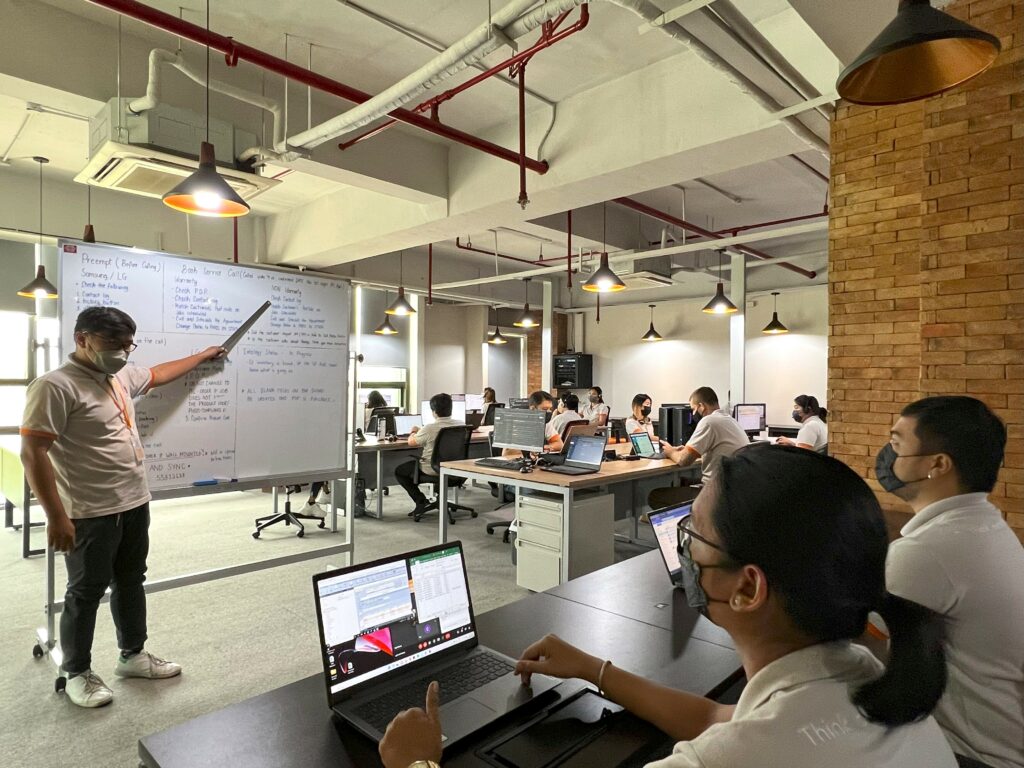
Process is king when leading Filipino teams, establishing clear guidelines around work process and tasks will go a long way to establishing a productive remote team.

Engaging and Motivating Filipino Employees

To keep Filipino employees engaged and motivated, it's important to understand their intrinsic motivation. In Filipino culture, family is a significant source of motivation, and many Filipinos work hard to provide for their families. Platintel tap into this by offering family-friendly working hours (our teams predominantly work a morning shift, finishing by either 2pm or 3pm in the afternoon, local time, additionally we offer flexible working arrangements). This means we not only get access to a broader pool of talent, but we are also able to keep our teams happy and motivated at work.

A study by Gallup found that engagement levels among Filipino employees are higher than the global average. However, and perhaps more importantly, this same study found that Filipino employees are more likely to leave their jobs due to work-life balance issues. This highlights the importance of offering family-friendly policies and work-life balance programs to keep Filipino employees engaged and motivated.

Recognition is also important in Filipino culture, and employees appreciate being acknowledged for their contributions. Take the time to recognise your remote teams' efforts and celebrate their successes, both big and small. This can be as simple as a verbal acknowledgment or a small token of appreciation. The important thing to remember to to engage and include them in the same way you would your onshore team. To assist with this, Platintel deploy a company wide reward and recognition program, rewarding and recognising our team for their contributions regularly.

Have you considered offering additional training and development opportunities for your remote teams? Filipinos value education and continuous learning, and they appreciate opportunities to improve their skills and knowledge. Offering training and development programs that align with your remote teams' career goals and aspirations can improve on-the-job performance, and foster a sense of belonging between your remote team and your onshore business.

Platintel Outsourcing deploy a company wide reward and recognition program, rewarding and recognising our team for their contributions regularly.

To summarise, if you have (or plan to build) a remote team in the Philippines, it will pay dividends for you to seek to understand the nuances of Filipino culture as a means to effectively manage and motivate your remote employees. Building strong relationships, effective communication, being flexible in working arrangements, providing recognition, and offering training and development opportunities are all essential to keep Filipino employees engaged and motivated in the workplace. By embracing these cultural nuances, you will create a positive work environment and build a strong and motivated remote workforce.

Keen to learn more about how Australian businesses just like yours are engaging remote teams in the Philippines? You can contact us via this link, or email info@platinumoutsourcing.com.au.


Platintel: AFR Fast Starter 2022

Platintel has been recognised by the Australian Financial Review as one of the fastest growing young companies in Australia for 2022.

The Australian Financial Review Fast Lists include the “Fast 100” and “Fast Starters” and are the authoritative voice on the fastest growing companies in Australia. 

Platintel was ranked #88 out of 100, and was the only Australian outsourcing company who made the list.

Our Founder and CEO, Tim Webb had this to say -

'I am extremely proud of each of our talented and committed team members and the efforts they display everyday in delivering on our mission of providing easy access to outsourced teams to Australian businesses'

Want to find our why Platintel is growing so quickly? Click here to arrange a time to chat with us.

What services does Platintel provide?

Platintel provides Australian businesses easy access to outsourced teams via our offices in the Philippines. We specifically operate in four customer verticals (click on any of the below services to learn more):

Creative and Development Outsourcing

Customer Support Outsourcing

Accounting and Finance Outsourcing

Back Office and Administration Outsourcing

The team at Platintel works tirelessly in providing a great business process outsourcing experience for all of our current partners, and it is only through our teams efforts that we have been able to grow so quickly (and sustainably).

You can access the full 2022, AFR Fast Starters list by clicking here.

Go team Platinum!

Outsourcing to the Philippines: all your questions answered

Why outsource to the Philippines?

The Philippines has long been the premier destination for outsourcing services, globally. The prominence of the BPO industry here in country and its position as the leading employer of choice for Filipinos creates an enormous talent pool of candidates in a variety of job functions. Remarkably, the BPO industry contributes more than 10% of the entire GDP of the Philippines!

Filipino's speak great English! The English language was introduced into the Philippines as a result of the presence of the US in the country (during its colonial occupation) in the early 1900's; English is now constitutionally named as an official second language of the Philippines. The English language is also prominent within the Philippines education system. Additionally, the accent of Filipinos is much 'lighter' than that of many of their Asian counterparts, such as other outsourcing destinations like India.

Filipino's are well educated; tertiary education is both popular and prevalent in the Philippines with 1.6 million Filipinos expected to graduate from higher education in 2022.

1.6 million Filipinos are expected to graduate from higher education in 2022

Alongside language and education, the Philippines is a strong cultural fit for Australian businesses looking to outsource. Like Australia, Christianity is the majority faith in the Philippines (making up approximately 90% of the population). So much like Australian's, popular holidays such as Christmas and Easter are celebrated (almost universally). Filipinos also love their sport, especially basketball and boxing. Go Manny!

Types of outsourcing services

Co-sourcing in the Philippines:

The most popular and familiar outsourcing model (for Australian SME). Whereby businesses retain full control and, their offshore resources simply act as an extension of their onshore team (think someone working remotely). The BPO you partner with manages all employment ancillaries such as HR and payroll. And in our case, we provide brand new physical IT equipment as well. You then manage your new offshore team member/s the same way in which you would a team member in Australia working remotely.

Offshoring in the Philippines:

The offshoring model of outsourcing is where an entity shifts an entire segment of their business offshore to a BPO to manage end to end, and eliminates the presence of this part of their business onshore. This includes the BPO providing all necessary systems and IT infrastructure, support teams etc. This model is more complex, as well as cost intensive, and is usually reserved for large multi-nationals (think Microsoft, Amazon, Uber etc).

Co-sourcing is the most popular and widely used outsourcing model for Australian small to medium sized businesses, and the barriers to entry are low

How much does it cost to outsource?

Despite the standard of living in the Philippines continuing to rise, and the emergence of a burgeoning middle class, the cost of living in the Philippines remains very low in comparison to Australia. This allows Australian businesses to enjoy large cost savings through a partnership with a BPO versus onshore hiring.

Generally speaking, savings in the range of 70% are not unusual.

Platintel generally aims to partner with organisations who are seeking a full time remote team member. We believe that providing dedicated full time resources in the Philippines delivers the best experience for our customers (as opposed to part time resources working for multiple businesses at one time).

Save up to 70% vs. onshore hiring through a partnership with an Australian owned and managed outsourcing company - Platintel

All of our team are employed on a full time basis (not contractors), with access to all government mandated statutory benefits as well as additional employment benefits such as private health care, allowances, fully funded team building events and free snacks!

The below indicative monthly prices* are all inclusive (ex of GST), with nothing more to pay. We do not charge any additional fees for onboarding, and provide all our resources with brand new IT equipment (laptop or PC, bluetooth headset, PC / laptop ancillaries).

What jobs can be outsourced?

These are some of the most common roles Australian businesses are outsourcing, but is not an exhaustive list of all services we provide. You can find further information on what we do by clicking the services drop down in the menu at the top of this page or by clicking on any of the links in the below list.

Data Entry outsourcing - $1,100 AUD

Customer Support outsourcing ie. call centre - $1,700 AUD

Marketing Coordination - $2,000 AUD

Accounts Officer (AR & AP) - $2,000 AUD

Front End Developer - $3,100 AUD

Backend Developer - $3,700 AUD

Full Stack Developer - $4,400 AUD

*pricing will differ based on candidate experience

Want further details on pricing? Click here and send us an enquiry - we respond within a few hours

What are the benefits of outsourcing?

The truth is, just about any job role can be outsourced. The more important question is what will work for your business, will it add value, and will it achieve the desired result. Whilst cost saving is generally a significant contributing factor in the decision making process, there are other factors and key benefits that outsourcing provides outside of the obvious cost savings.

Focus on your core business

Outsourcing gives you the scope to focus primarily on your core business. What do we mean by this? Non value add activities such as sales order entry, processing of returns, updating of product listings etc are all low hanging fruit in terms of the types of tasks that can be easily shifted to an outsourcing provider in the Philippines.

Access a larger talent pool

Access a much larger talent pool, gain a competitive advantage by looking outside Australian borders to secure the right person for your team. The Philippines has a working age population of nearly 48 million people in 2022! Outsourcing does not mean you have to reduce your onshore team in size, re align your onshore resources, and scale your team offshore.

De-risk your business

Outsourcing can significantly de-risk your business. Onshore hiring means you have obligations under Fair Work Australia to manage redundancies etc in the event trading conditions change. Platintel has a simple 60 day notification if you wish to cease using our services and there are no exit fees or additional costs to pay.

Outsourcing provides benefits to your business outside of just significant cost savings

What is the process to begin outsourcing?

Outsourcing to the Philippines made easy. We are committed to helping Australian businesses to think outside the box by providing them with easy access to outsourced teams. At Platintel we work on a five step onboarding process.

Discovery: we take the time to completely understand what it is you are trying to achieve by outsourcing. We conduct face to face discovery meetings (either in person or virtually) to gather as much information as we can about your goals, and plans to outsource. This includes collecting job specific information such as position descriptions, KPI's, and your ideal profile for your new team member/s.

Recruitment & Selection: we recruit bespoke for all of our customers. This ensures we get both the correct skills match, but also the right cultural fit for your team. Some of our partners choose not to be involved in the recruitment process prior to selection, and we run pre screening of candidates, and the interview process on their behalf. Others, choose to be intimately involved in the process, joining the interviews and conducting skill assessments (such as live coding tests for developers).

There is no commitment to use our services prior to selection and a start date being agreed, there are also no upfront costs

Start Date Agreed: once you have selected your ideal offshore team member/s, a start date or go-live date is agreed. At this point you sign our simple and straight forward service agreement and we begin prepping for your team members first day working for your business!

Induction: we run a Platintel company induction with all new team members on their first day. We introduce them to our business, our payroll and HR processes and policies, general KPI's regarding schedule adherence etc. and get them set up at their workstation with all the necessary IT equipment to start working for your business.

Training & Handover: similarly to the recruitment and selection stage, some of our customers like us to be involved in the training of their new offshore team. We can also assist in the creation of work instructions and process documents to ensure your team have access to all the necessary resources to be able to do their job to the required standard. This is an add on benefit and is offered to all customers free of charge. Once training is completed, we essentially 'hand over' your new team to you, and they begin working in your business like any other member of your team.

We check in regularly with both you and your team to ensure things are working as they should be (this includes us conducting one on ones with your team here in Manila, facilitating probationary reviews, and general coaching for improvement).

We can also assist in the creation of work instructions and process documents to ensure your team have access to all the necessary resources to be able to do their job to the required standard - this benefit is offered free of charge

We have more than doubled in size during 2022 and being recognised externally along the way for this acheivement, this is a direct result of our commitment to giving Australian businesses easy access to outsourced teams here in the Philippines.

We love nothing more than speaking with Australian businesses about how Platintel is adding value through sustainable, ethical, and pragmatic outsourcing solutions.

Contact us today to discuss how we can help your business also realise the benefits of outsourced teams.

Outsource Accelerator - Podcast

Our COO, Dale Pearce was recently featured on the Outsource Accelerator podcast with Derek Gallimore. Check out the episode at this link!

Manila Freedom Run 2023: Platintel

Manila, the bustling capital city of the Philippines, comes alive each year with the resounding cheers and footfalls of passionate participants, all united by a common cause – the Freedom Run. This highly anticipated event not only serves as a celebration of the country's independence but also as a powerful platform for advocating freedom and societal progress. With its rich history and unwavering commitment to a good cause, the Freedom Run has become an iconic event that inspires and mobilises thousands of individuals, young and old, to run towards a brighter future.

For over a decade, the Freedom Run has been an integral part of Manila's cultural fabric. Originating in 2009, the event was conceived as a way to commemorate the country's freedom from colonial rule and to promote the values of unity, resilience, and determination. Over the years, it has grown exponentially, attracting both amateur and professional runners from all walks of life, eager to support the cause of freedom.

The Freedom Run embodies a spirit of philanthropy, serving as a platform for raising awareness and funds for various charitable initiatives. The event partners with local organizations dedicated to uplifting underprivileged communities, empowering marginalized groups, and promoting education and healthcare. By participating in the Freedom Run, individuals contribute to these worthy causes, making a tangible difference in the lives of those in need.

The Freedom Run is typically held on or around the 12th of June, which marks the anniversary of the Philippines' independence from Spanish colonization. The event includes multiple race categories to cater to different fitness levels, ranging from a 3-kilometer fun run to more challenging distances such as 10 kilometers and even a half marathon. The race routes wind through iconic landmarks of Manila, offering runners a scenic and memorable experience.

Participants of the Freedom Run not only enjoy the exhilaration of the race but also partake in a vibrant carnival-like atmosphere. The event features lively music, cultural performances, and food stalls serving delicious local cuisine. Runners don their race bibs, often adorned with messages of hope and unity, as a symbol of their commitment to the cause of freedom and social progress.

The Freedom Run in Manila has emerged as an event that encapsulates the essence of freedom, unity, and social responsibility. It provides a platform for people from all walks of life to come together, celebrate the nation's independence, and support worthy causes that uplift marginalised communities. A massive congratulations to all those who participated, especially members of the Platintel team, great effort guys!

Business Process Outsourcing (BPO) in the Philippines: An Historical Timeline

Platintel only recently made its entry into the Philippines, setting up our offices in the southern part of the National Capital Region (‘NCR’), Alabang, in 2021. We have since grown our presence in the country to over 80 FTE, and plan to grow our team here to 200 over the coming 18 months.

The BPO industry here in the Philippines was thriving long before Platintel was founded, and has experienced significant growth since its inception, becoming a major economic contributor to the country and its people. As well as becoming what most consider to be the premier destination for the global outsourcing market.

It is an interesting journey for a country that is still very much a developing nation – and a story that is still being written. I have done my best to verify the timeline and information, however if there are any errors in my research please reach out.

Humble Beginnings

The BPO industry in the Philippines can trace its roots back to the early 1990s, when Frank Holz established the Accenture Global Resource Center, marking the birth of the Philippines' first contact center. Following on from that was PeopleSupport, with their Parent company, Los Angeles-based PeopleSupport Inc., beginning operations in 1998, providing outsourced customer service and sales support for e-commerce sites. PeopleSupport were among a handful of outsourcing companies to open in the country in the late 1990’s (at the height of the dot-com bubble burst). Unsurprisingly in hindsight, the decision paid off with first year revenues in the Philippines 5.8 times the 1999 revenues when it operated only in the US.

In February of 1995, Former President Fidel V. Ramos introduced the Philippine Economic Zone Authority (PEZA), which offered Government incentives such as tax breaks and support for infrastructure development. The primary function of which was to assist in attracting foreign investment. This continues to this day, with most BPO companies operating within what are known as ‘PEZA’ zones, enjoying economic and other benefits.

Around the same time, Sykes Enterprises also established their presence in the country, cementing its position as the first of its kind in the nation. This move not only demonstrated the Philippines' appeal as an outsourcing destination but also lit the flame for future industry growth. Sykes retain a very large presence in country today, with employment numbers in the 10’s of thousands.

Rapid Growth and Diversification (the early 2000’s)

The year 2000 witnessed the outsourcing industry contributing 0.075% to the Philippines' GDP, foreshadowing the potential for future growth and economic impact. The Contact Center Association of the Philippines (‘CCAP’) is established, an initiative aimed at promoting collaboration, sharing ideas, and enhancing awareness within the contact centre industry. CCAP now has nearly a hundred member-companies in various locations in the Philippines. These members account for more than 84% of the economic activity and employment in the industry as of 2022.

In 2003, Convergys Corp (now Concentrix) strategically expanded its global footprint by establishing two sites in the Philippines, alongside India, under the leadership of then-president Jack Freker. This move set the stage for increased revenue and job opportunities within the Philippine outsourcing sector. Not long after, the Philippine government launched the ‘Roadmap for the IT-BPO Industry’, which aimed to position the country as a preferred global outsourcing destination.

The mid-2000s saw a surge in the BPO industry's growth, driven by factors like the Philippines' English-speaking population and competitive labor costs. The industry diversified beyond voice-based, contact centre services to include back-office processes like finance and accounting, human resources, and healthcare-related services.

It was in 2007 that Telstra first made its move to outsource roles to the Philippines, as they continue to do up until today. It was around this time that I had my first exposure to outsourcing / offshoring to the Philippines whilst working for a North American company (RCI, now owned by Wyndham Worldwide), when our satellite North American support arm was moved from Australia to the Philippines.

Global Leadership and Expansion (2010s)

In late 2010, the Philippines was named the world’s BPO capital after it employed 525,000 people and generated $8.9 billion in revenue. The sector experienced continued growth, attracting a wide range of businesses, including multinational corporations, startups, and SMEs. The industry expanded beyond Metro Manila, with Cebu, Davao and other cities becoming prominent outsourcing hubs. This expansion helped create job opportunities and economic growth outside of the National Capital Region.

It is now 2012, the BPO industry has revenues accounting for 5.4% of the country's GDP and the sector provided employment opportunities to over 700,000 Filipinos. As technology evolved, the BPO industry in the Philippines adapted by incorporating this into its offerings. This in turn allowed the industry to provide more sophisticated and higher-value services, such as data analytics, software development, and digital marketing. As a result, by the following year (in 2013) revenue generated from the industry had increased to $15.5 billion, while the number of full-time employees reached a milestone of 900,000.

The industry faced a temporary setback in 2017 due to the Marawi conflict in Mindanao, which led to apprehension among foreign investors. Nevertheless, the Philippines' outsourcing sector demonstrated resilience and recuperated its growth trajectory, and in the year 2018, the industry created an additional 70,000 jobs, and added a further $1 billion in revenue.

Late 2010’s to Present Day

By 2019 the Philippines had made substantial progress on the global stage, climbing from 124th to 95th place in the World Bank's ease of doing business index. This upward trajectory signified the nation's commitment to fostering a conducive environment for foreign investment.

Despite the challenging economic landscape brought about by the COVID19 pandemic, the Philippine BPO industry exhibited resilience by still recording a rise in revenues (albeit meager; 1.4%). This tenacity underscored the sector's importance in contributing to economic stability – and the faith placed in the industry by the global market. The year 2021 proved to be a watershed moment for the Philippine BPO industry, with a workforce of 1.3 million and a staggering $30 billion in revenue, the sector solidified its position as a critical driver of the Philippine economy.

This growth has continued into 2022, with a revenue increase of 10.3% to $32.5 billion, and employee headcount rising 8.4% to 1.57 million!

Onwards and upwards!

Thanks for reading.

Virtual Assistants in the Philippines

The role of virtual assistants (VA’s) has evolved to become an integral part of many Australian businesses, across a variety of industries. The Philippines, widely recognized as the global hub, and premier destination for business process outsourcing (BPO), has become the go-to destination for Australian’s looking to hire a skilled, qualified and experienced VA.

Why consider hiring a Filipino Virtual Assistant?

Proficiency in English: The Philippines boasts a population that is largely bilingual (with English as their official second language). With over 90 million English speakers in a country of 103.3 million people, the Philippines ranks high in English proficiency globally. This linguistic dexterity places the Philippines in the enviable position of being the second most proficient English-speaking country in Asia and 18th in the world. These language abilities empower Filipino VAs to engage in nuanced business discussions, comprehend instructions with precision, and competently manage intricate tasks without the need for micro-management or continuous oversight

Building Trust and Relationships: Filipino VA’s excel in building meaningful connections with their clients, juggling multiple tasks and ensuring that client expectations are consistently met. They innately understand the balance between retaining respect for authority, a prominent trait in Filipino culture, and fostering balanced relationships with clients and counterparts from diverse cultural backgrounds

Affordability without Compromising Quality: While cost-efficiency is an undeniable advantage, it's crucial to dismiss the misconception that cheaper somehow means inferior quality. The salaries of virtual assistant services can fluctuate depending on several factors (no different to onshore hiring), including educational background and experience. Filipinos are setting the standard for VA's globally, and the growth of this vertical amongst the many other functions performed remotely from the Philippines is a testament to the quality of candidates available to Australian businesses

Varied Skills: The talent pool of VA's in the Philippines is rich and diverse, long gone are the days of utilising VA's purely for administrative and back-office tasks only. VA's are now available in all 'shapes and sizes', and most will be experienced within a particular niche (think digital marketing, sales support etc). There are also many VA 'all-rounders' with experience across a variety of functions, making them ideal for small or medium business, whereby their function might be less specific

Finding the right Virtual Assistant

The process of hiring a Filipino virtual assistant will vary depending on the BPO you choose to engage with. Our process here at Platintel is outlined below!

Recruitment: We bespoke recruit for all open positions; we do not attempt to fit a round peg into a square hole. We understand that our clients requirements and expectations differ, and equally so does the experience of candidates. Generally we will ask our client partners to provide us a brief in the form of a Job or Position Description, which we will use to assist us in finding the right candidates for prescreening

Prescreening: Our team conducts initial prescreening interviews with candidates, preparing a shortlist for you to then review then decide upon which you choose to progress to a formal interview

Interviews: We arrange the interviews with shortlisted candidates, and assist you in preparing any interview questions (as well as chairing the interviews). Some of our clients trust us to find them the right candidates, and are not involved in the recruitment process, others want to be intimately involved. The choice to what degree you wish to be involved is entirely yours!

Applicant Testing: We leverage technology to assess candidates suitability, our preferred testing platform is Canditech. We offer this add-on benefit at no cost to our client and see it as a way of giving you peace of mind that we are delivering you the 'best in market' talent

Pre-employment Checks: As standard, we conduct two professional reference checks, and pre employment medicals for all new hires. Some clients like us to conduct additional pre-employment checks, such as criminal history checks etc. We are happy to assist with any type of pre-employment check you and your team require upon request

Provisional Offer of Employment: Once you have selected your preferred candidate, and they have successfully fulfilled both the applicant testing and pre-employment check components, we then make the candidate a provisional offer of employment in writing. Once they accept the provisional offer, we then provide you a copy of our, Platintel service agreement for you to review and sign, before we make a formal offer of employment

Formal Offer of Employment: We provide the candidate a contract of employment, which includes details of the role they will perform in your business, in the form of a detailed position description. Our employment contract also includes our internal KPI's, and a reference to 'client KPI's' which you will set for your new remote team member

Onboarding: Our onboarding period is loosely defined as the 30 days prior to your new remote team member starting work, and the proceeding 30 days subsequent to their first day of employment. You will be provided with an onboarding pack with some 'tips & tricks' on managing remote employees, specifically geared to those located in the Philippines. Additionally, we provide you with the details of how employees are managed through the probationary period of employment (6 months), and detail how we will support you on ensuring you get the most from your new Filipino, Virtual Assistant

Advantages of Hiring A Filipino VA via a BPO Company

Cost Savings: partnering with Platintel can lead to substantial cost savings, often up to 70% vs onshore hiring

Managerial Oversight: BPO firms maintain a strong focus on the oversight of their employees. Platintel has an experienced operations leadership team, who support our clients in developing and performance managing their remote teams. We also leverage technology through the deployment of a wide variety of productivity monitoring tools

Onboarding Support: Platintel can assist in the onboarding process, taking some of the burden off of your onshore team, and reducing the time required to effectively onboard your new virtual assistant

If you are interested in learning more about how a virtual assistant can save you time and money, and add value to your business, then get in touch with us here on our website via the Contact or Get Pricing buttons - we reply within two hours.

Unemployed & Afraid - Podcast

Our COO, Dale Pearce was recently featured on the Unemployed & Afraid podcast with Kim Kerton.

Dale talks about his journey becoming a partner, and owner of a business for the first time. He also deep dives into his experiences leading teams in South East Asia.

You can listen via all the usual podcast platforms, click here to listen on Spotify.

Outsourcing Success – Tips for Outsourcing to the Philippines

Outsourcing can be a powerful tool for businesses aiming to streamline operations and boost profitability. However, embarking on an outsourcing journey without a well-thought-out plan, like anything in business, is a potential recipe for disaster. To ensure your journey into outsourcing and leveraging remote teams is successful, follow a structured approach customised to your business.

Below we identify what we believe to be 10 critical steps to help you achieve outsourcing success.

1. Set Clearly Defined Goals

Outsourcing decisions should involve your entire team to accommodate for diverse ideas and motivations, and to address any concerns or misconceptions. Start by defining your overarching goal, whether it's reducing operational costs, enhancing efficiency, or achieving other specific objectives. Setting clear goals ensures alignment and provides direction for your outsourcing strategy

2. Assess Your Processes

Before venturing into outsourcing, evaluate your current processes and workflow. Conduct an internal review and determine whether any amendments are necessary to accommodate changes triggered by outsourcing. Clear processes are essential in any businesses, but even more so when you are engaging with a third party, external to your business

3. Leadership

Managing a remote team requires meticulous planning and commitment. Prepare your leaders to shoulder the responsibilities of training and daily management - outsourcing and building a remote team is not a 'set and forget' endeavour. Appointing a dedicated leader either onshore, or as part of your new remote team will ensure you achieve the right results

4. Identify Advantages, Obstacles, and Challenges

To ensure the success of your outsourcing initiative, it's essential to identify both the advantages and potential obstacles or challenges associated with this strategy. Take into account factors like cost savings, technological capabilities, communication, and team structure. Seek advice from experienced individuals in your network or consult with reputable outsourcing providers to learn from their experiences (before making any commitments)

5. Use KPI's to Measure Success

Goals provide a clear direction, sense of purpose, and a baseline for feedback on progress, which are all crucial elements for successful remote teams. Compare your current Key Performance Indicators (KPIs) with the goals you intend to achieve through outsourcing. These measurements will help you determine whether outsourcing is the right model for your business. Utilise this data to fine-tune your outsourcing strategy

6. Understand Different Outsourcing Models

Before partnering with an outsourcing provider, it's vital to understand the various outsourcing models available and how they align with your business goals. Research potential partners, assess their background, review customer testimonials, and ensure that pricing and services are clearly defined before making a decision - outsourcing is not one size fits all, be sure to fully understand the implications of each outsourcing model, and how it will fit your onshore business

7. Look at Every Possible Scenario

Scenario planning is a valuable tool for addressing potential challenges and instilling confidence in your team to handle issues as they arise. Evaluate potential issues that could arise during the outsourcing process and collaborate with your team and outsourcing provider to turn these challenges into opportunities

8. Evaluate the Risks

Growth often entails risks, and outsourcing is no exception. It's imperative to identify potential risks, such as legal, environmental, or technological concerns. Discuss these issues with your team, gain insights from businesses experienced in outsourcing, and collaborate with your service provider to develop a comprehensive risk mitigation plan

9. Create a Business Plan

Outsourcing is a multi-step process that necessitates meticulous planning. Compile data, including risk assessments and potential scenarios, into a comprehensive business plan. Document all aspects of your business structure, costs, profits, workloads, goals, and timelines to ensure you have a clear strategy to support your objectives and growth targets

10. Develop an Action Blueprint

With your business plan in hand, create a blueprint for implementing outsourcing into your business. Set realistic deadlines, allocate budgets for necessary tools and technology, and discuss changes with your team. Consider whether additional deals, new relationships, or training and support are required for a successful outsourcing transition

Keen to learn more? Check out our Resources Page here for more useful outsourcing insights.

Want to start your outsourcing journey or get a quote, get in touch via this link. We reply within two hours.

Outsourcing Estimating for Australian Businesses

The concept of outsourcing construction estimating is not a recent development, having been accessible and in practice for several years in construction businesses of all persuasions. Not only here in Australia, but in Europe and across North America.

Despite its existence, Australian businesses may still be unaware of the benefits that building a remote team to handle this function can have. Or, for those who are aware of the option to outsource you might still be apprehensive about whether the purported benefits outweigh housing the task internally.

 In this blog post, we'll unravel the intricacies of outsourcing construction estimating and delve into the benefits.

How Does Outsourcing of Estimating  Roles Work?

Despite some common misconceptions, you retain full control and, your remote estimators simply act as an extension of your onshore team (think someone working from home in Australia). The outsourcing company you choose to  partner with manages all employment ancillaries such as HR and payroll. And in our case, we provide brand new physical IT equipment as well. You then manage your new offshore team member/s the same way in which you would a team member in Australia.

At Platintel, our new client process comprises five key steps.

Discovery:

We dedicate time to comprehensively understand your outsourcing objectives. Through face-to-face discovery meetings, whether in person or virtually, we delve into your goals and outsourcing plans. This involves gathering essential information, such as position descriptions, KPIs, and your preferred profile for the new team member/s.

Recruitment & Selection:

We tailor our recruitment process for each client, ensuring a precise match of skills and cultural fit for your team. Some partners prefer a hands-off approach, allowing us to handle pre-screening and interviews. Others actively participate in the process, joining interviews and conducting skill assessments. There is no obligation to use our services until after selection, and there are no upfront costs.

Start Date Agreed:

Once you've chosen your ideal offshore team member/s, we agree upon a start date or go-live date. At this point, you sign our straightforward service agreement, and we initiate preparations for your team member's first day with your business.

Induction:

We conduct a comprehensive Platintel company induction for all new team members on their first day. This orientation includes an introduction to our business, payroll and HR processes, policies, general KPIs (e.g., schedule adherence), and the setup of their workstation with all necessary IT equipment to commence work for your business.

Ongoing Support and Monitoring:

We maintain regular communication with both you and your team to ensure smooth operations. This involves conducting weekly client onboarding calls, one-on-one sessions with your team in Manila, facilitating probationary reviews, and providing general coaching for improvement. Our commitment extends beyond onboarding to foster a successful and long-term partnership.

Pros of Outsourcing Estimating

Reduced Costs:

How do you reduce costs via partnering with an outsourcing provider? In general, salaries in the Philippines for qualified and experienced estimators are in the range of 55-60% lower than that of Australia. Additionally, you save on the cost of recruitment, office space, and IT equipment.

Ability to Submit More Bids:

Lowering bid preparation costs, facilitates the submission of more proposals within the same budget. Outsourcing eliminates restrictions imposed by an in-house team, potentially increasing bid success rates.

Outsourcing construction cost estimation provides a competitive advantage, simply put you can improve your capacity for bidding. This frees up your onshore team to concentrate on higher-value activities like project management, customer interactions, and data-driven decision-making.

In the competitive construction sector, mastering the art of bidding is crucial. A comprehensive strategy that incorporates lead generation, accurate estimates, and insightful financial management is necessary. By outsourcing construction cost estimation, businesses can improve their bidding process without affecting their budget, leading to more contracts and more profit.

Talent Pool:

Finding the right people is a challenge in all sectors in 2023, getting access to, and mobilising skilled labour is cost and time intensive. The Philippines has a working age population of nearly 48 million people.

Flexibility:

Engaging in outsourcing can substantially mitigate risks for your business. Opting for onshore hiring subjects you to obligations outlined by Fair Work Australia, especially concerning the management of redundancies in the event of changing trading conditions. At Platintel, our approach is transparent—we provide a straightforward 60-day notification period should you decide to discontinue our services. Importantly, there are no exit fees or additional costs associated with terminating our partnership.

We take great pleasure in engaging in discussions with Australian businesses, sharing insights into how we improve efficiency for our partners while also delivering substantial cost savings. Feel free to get in touch with us through our contact form or by emailing info@platinumoutsourcing.com.au for additional details or to arrange a convenient time for a conversation.

10 Reasons to Choose Platintel!

1. Full-time, Dedicated Remote Teams

All of our team are employed full-time. This means they receive all of the statutory benefits afforded to them under the relevant employment and labor legislation in the countries which they work – such as security of tenure. It also means that money goes back into the economy (in the form of tax) to support their local communities.

Your remote team are employed specifically for your business, the same way in which you would recruit and select a candidate onshore in Australia. They are simply an extension of your onshore team, working remotely from our offices.

2. Transparent Pricing

Our pricing is fixed, and fully transparent. The amount invoiced to you each month does not change, and it is made up of two components:

  1. Employment Costs
  2. Our Fee

Employments costs are made up of the following:

  1. Base salary and allowances
  2. Government and statutory contributions
  3. Private Healthcare

What does our fee cover? Here are some of the items our monthly fee contributes to:

  1. Facilities
  2. IT costs
  3. Remuneration of our supervisory and support staff (HR, IT etc)
  4. Employee development and retention programs
  5. Performance based incentives

3. Modern, Secured Facilities

We strive to provide our teams and clients with best-in-class facilities to work from and visit.

Our flag ship office is located in the prestigious Filinvest City, in Metro Manila – 25 minutes from Ninoy Aquino International Airport.

Asian Star is a 22 story, Grade A, PEZA Certified, office building. The building is fully secured by static and roaming, armed security, with metal detectors on entry.

Our offices are located on the 14th floor with 360 degree views north to Makati, east across Laguna De Bay, south to Santa Rosa, and west across Bacoor. Entry is via biometrics, and all areas of operations are CCTV monitored. No mobile phones, recording equipment, removable data storage or alike are allowed within the operations area.

We provide both redundant power and connectivity. Our two-internet service providers use separate on premise, and submarine infrastructure meaning if one connection fails, we are able to remain operational.

Our Jakarta based team are located directly adjacent to the bustling South Quarter of Jakarta, on the 13th floor of the Metropolitan Tower (35 minutes from Jakarta International Airport). Similarly to our flagship office in Manila, the Metropolitan Tower is a fully secured Grade A building set within vast, tropical gardens with cascading water features it also features comprehensive lifestyle amenities including top floor pool, gym, and cafes.

4. Onboarding Support

We recognise that building a successful remote team requires effort and engagement from both the client and outsourcing provider. This is why we place a very keen focus on providing bespoke onboarding support for all client partners.

What does our onboarding support look like?

  1. We provide all new clients with a detailed onboarding pack, including details on how we support, KPI and performance manage their remote teams
  2. We provide written resources on cultural nuances, ensuring that you have the tools to lead your remote team, and keep them engaged
  3. We provide you with an onboarding schedule, that includes weekly video calls with your Customer Success Manager
  4. We have dedicated support teams (HR, IT, Operations) available to you in real-time, to cover any concerns, answer any questions, or provide you on-the-job support

5. Employee Benefits

It is a key part of our competitive strategy to be certain that we are attracting and retaining the best talent.

We focus carefully on reviewing the employment landscape regularly, and positioning ourselves as an employer of choice for candidates who are open to new opportunities. This is why we maintain a 4.7 (out of 5) rating on Glassdoor.

What are some of things we are doing to ensure our client partners get the best talent available?

  1. Compensating our team above market
  2. Providing additional earning opportunities (i.e. performance based incentives)
  3. Generous leave entitlements
  4. Fully subsidised private healthcare
  5. Regular company events and team building activities
  6. Medical grade air purification systems to keep our team healthy in the office
  7. Clean, modern and professional offices to work from

6. No Long-term Agreements

We don’t believe in locking our clients in long-term.

One of the key pillars in the outsourcing value proposition is lowering risk by having the option to scale your levels of resourcing up (and down) as required. Long, and complex cessation clauses erode this benefit.

We have a simple 60-day notice period for cessation.

7. Cybersecurity

Entry into our offices are via biometrics, and all areas of operations are CCTV monitored. No mobile phones, recording equipment, removable data storage or alike are allowed within the operations area – and ports on all assets are disabled, meaning data cannot be transferred to any external storage device.

We provide all of our teams with tier 1 IT equipment, and use industry leading, NinjaOne to manage, patch, and support all of our endpoints. Endpoints are secured via NinjaOne’s integration with Bitdefender.

Additionally, we deploy Controlio, which is a cloud-based computer monitoring software to all team members working from home.

8. Competitive Pricing

Whilst we do not compete on price, we remain price competitive. Generally speaking, our clients are saving between 50% to 75% on a like-for-like basis versus onshore hiring.

If you are interested in obtaining indicative pricing for any role, you can contact us here, and we will respond within two hours.

9. Fully Compliant, Legal Entities

Platintel has established legal entities in Australia, the Philippines and Indonesia. This means that you can be assured that we are fully compliant and legally able to do business in the countries in which we operate, and which your remote teams work from.

10. Australian Owned and Managed

We are proud to exclusively service the Australian market. Dale Pearce leads the business as an Executive Director (Chief Operating Officer), and splits his time between Australia, the Philippines and Indonesia. Despite Platintel growing rapidly, Dale remains committed in being directly involved in the initial setup of all new client accounts, including personally handling the vast majority of recruitment, and talent acquisition.